rain
haze
passion
purple…velvet…natural dyes…heavenly
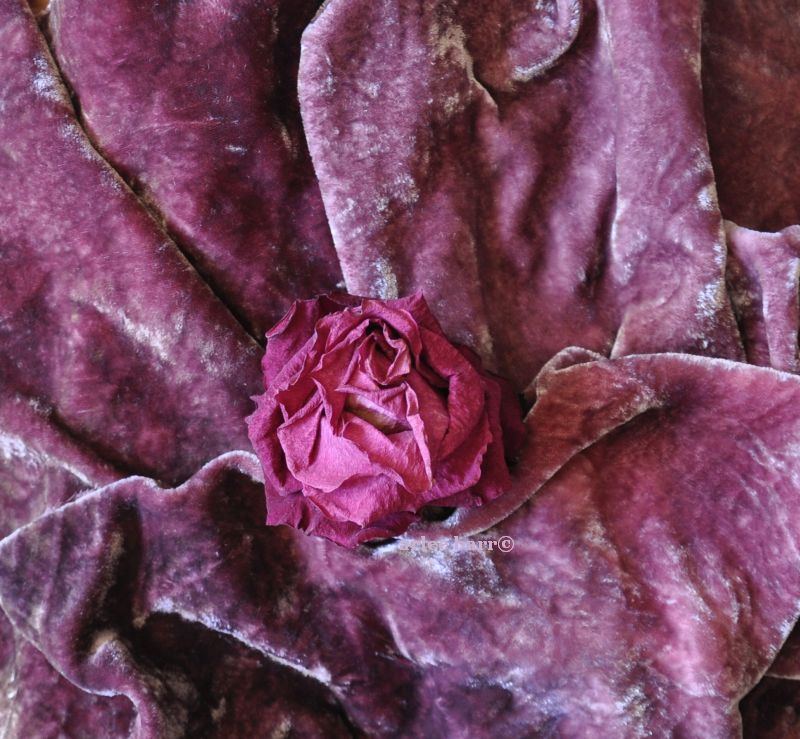
rain
haze
passion
purple…velvet…natural dyes…heavenly
I’ve had a love affair with velvet since i was 12 and found a Vogue magazine that advised “A pant of lavender panne velvet is the essential in a bohemian styled wardrobe.” I’m not sure *how* i thought my 60cent an hour babysitting jobs were going to finance the purchase of an $800 garment, but that was obviously beside the point  (I’ve never forgotten that quote either…) Natural dyes coupled with silk velvet have me quite giddy at the moment. 😍
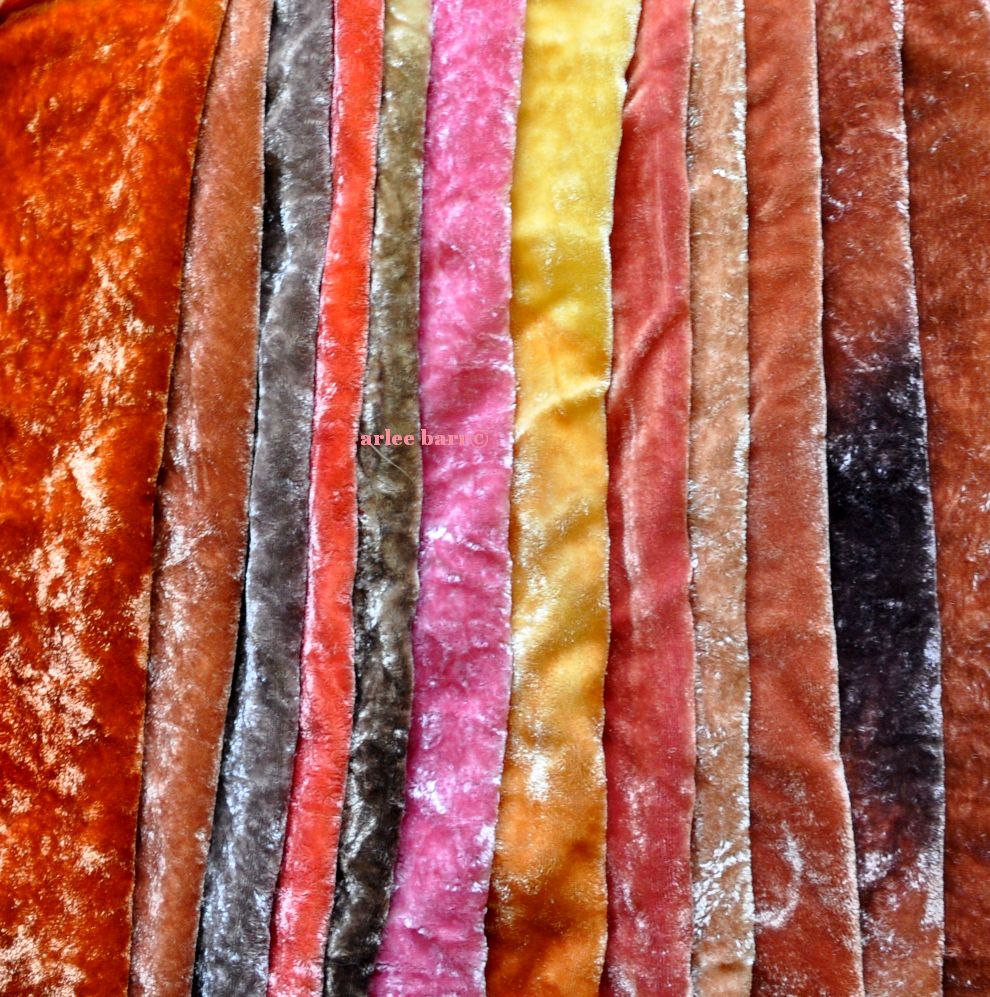
I just have to fire up the indigo pot, do some dye combinations and extend the colour range a bit more as we need greens, blues, purples, almost-blacks, different pinks!
Listings will start on July 5th, with 2 differently sized packs, and as always, i refund any extra shipping paid!
I should be/am slowly working on Samara, but i keep returning to the ethnic embroideries of Central Asia.
What if i did this sort of thing:
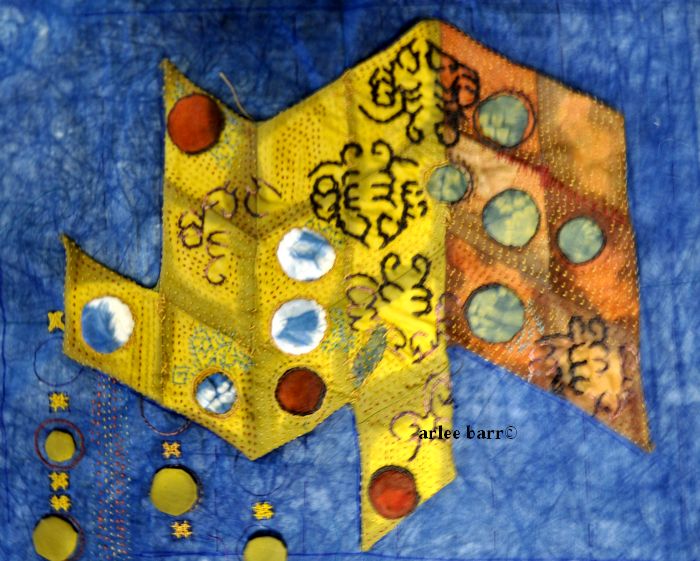
with these?
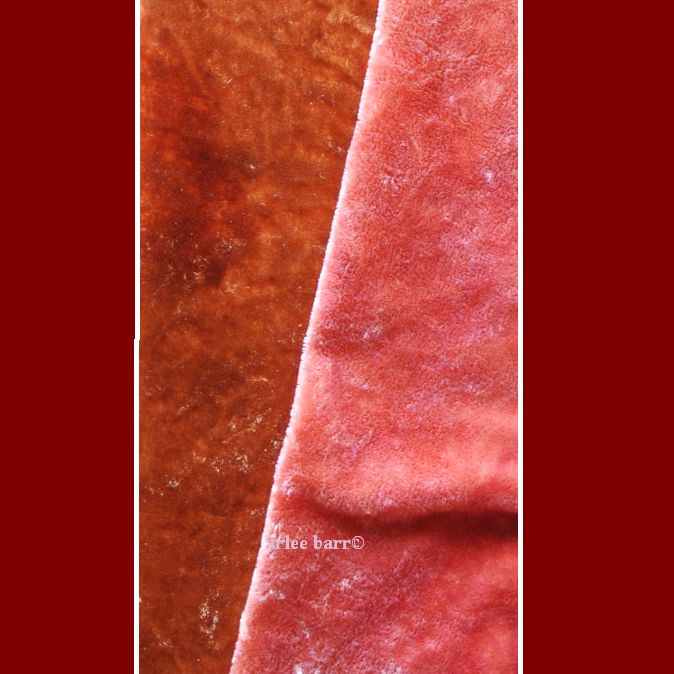
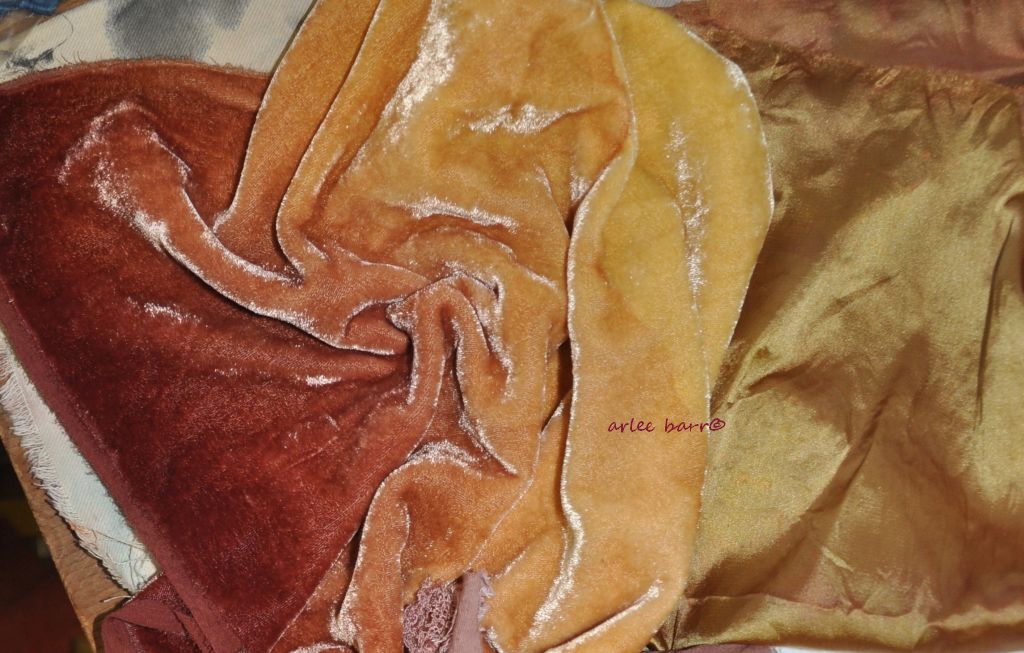
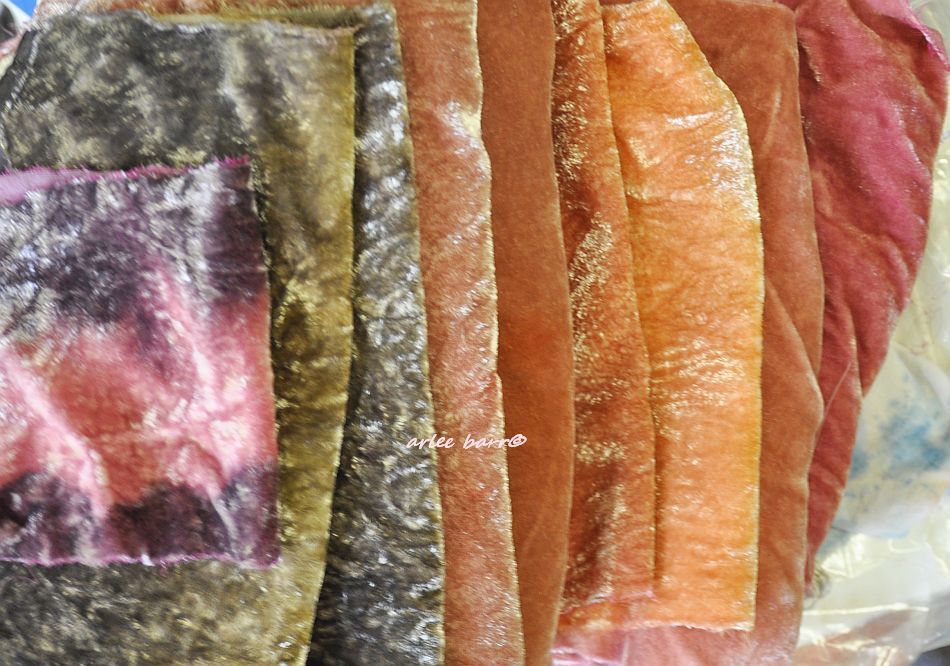 Admittedly, silk velvet , *any* velvet is a bitch to sew, slipping, sliding and slithering everywhere but where it’s supposed to go, BUT. I have more patience now with my work, and intend to this all by hand, so maybe a lot of pinning and bulldog clipping?
Or mix with some of the other recent textured fabrics? Yup.
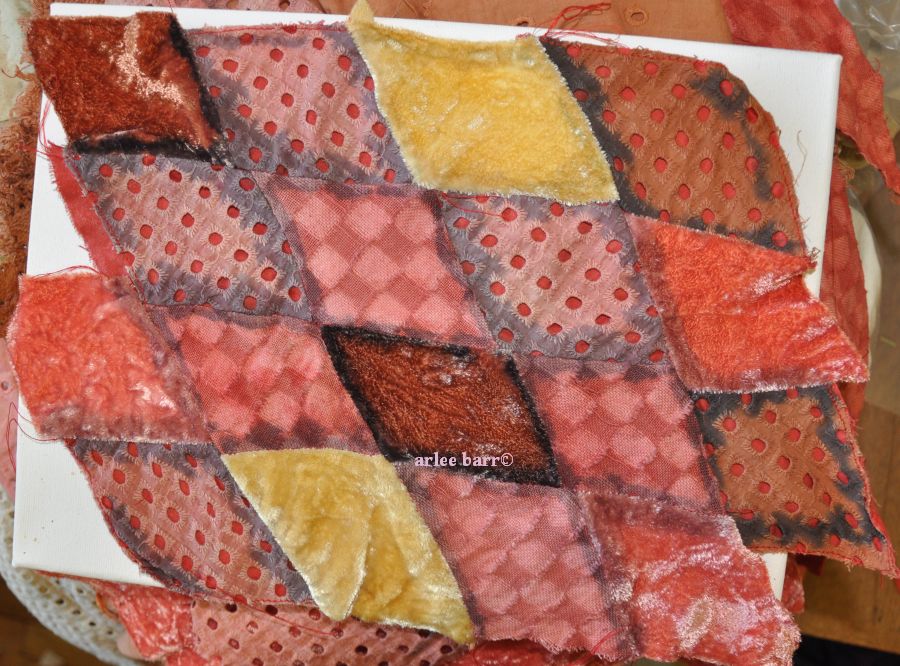 Perhaps some indigo again?
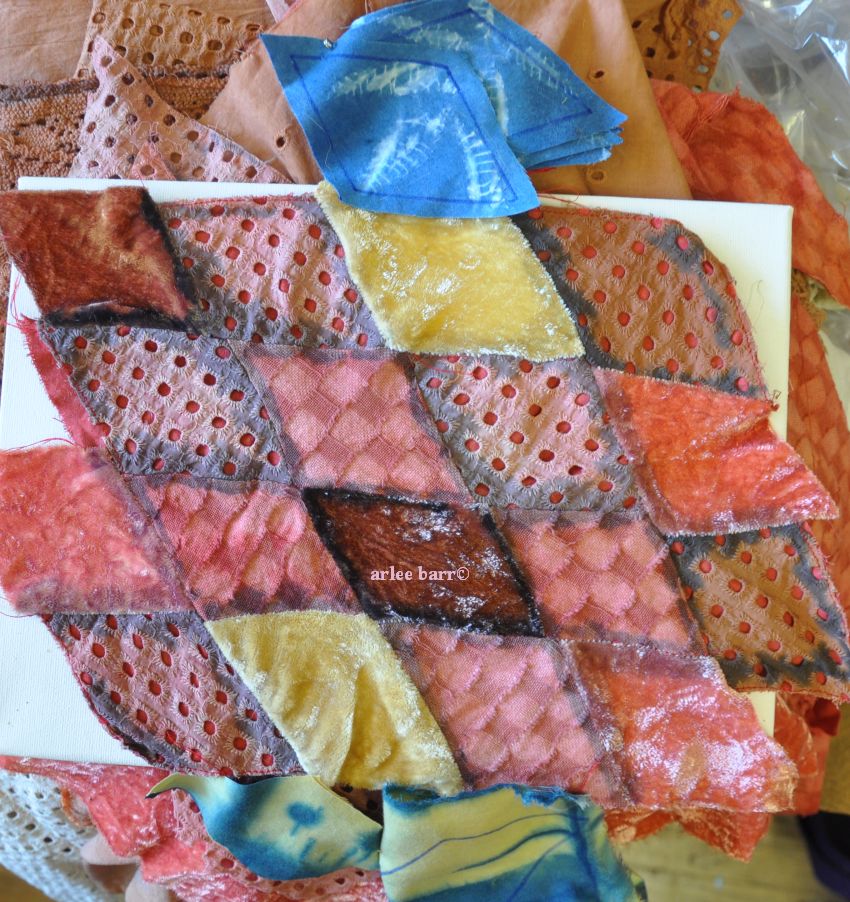 what shape will this one become?
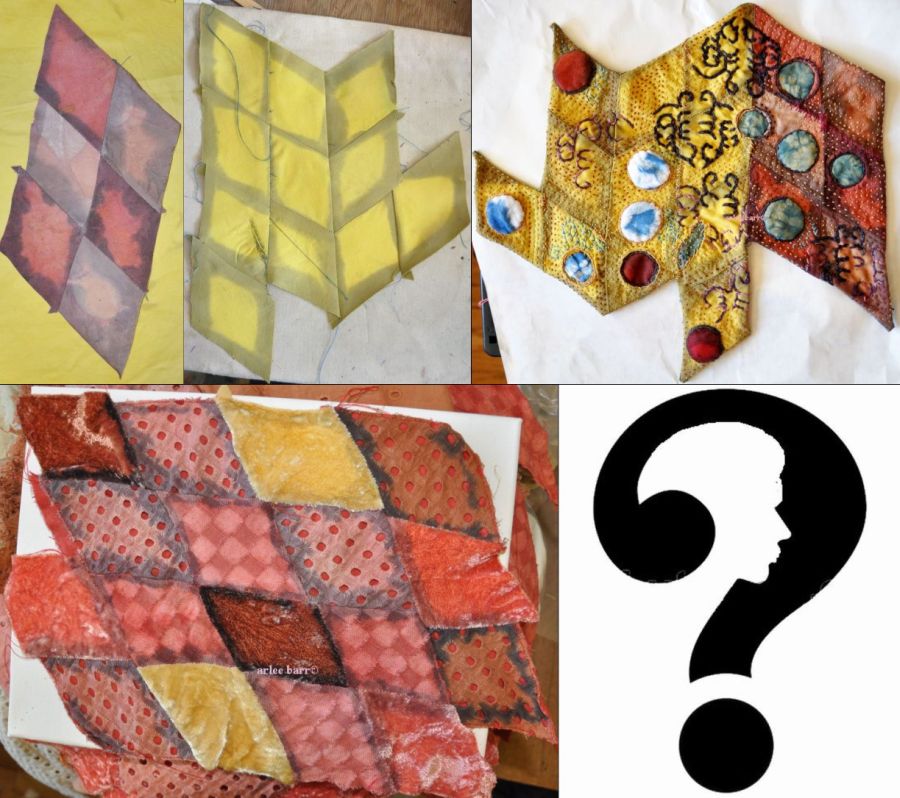
Cutch and madder on silk velvet, MOAN. Can’t wait to work with these beauties! Admittedly i wanted the madder red on the velvet like the last few cotton results, but this deep rose is yumshy, wonderful with that foxy cutch!
Every dyer knows about walnuts for deep browns. Walnuts don’t grow in Alberta. I have some frozen ones still, sent by a generous friend in Ontario, and intend to dig them out, but needed some browns *now*.
Cutch yields chocolate, toffee, cinnamon, clove, mocha—mm, all delicious sounding 🙂 I’ve wanted to try it since i started noticing it in my “ethnic” embroidery research (India and the Mid/Central Asian regions), and for Mother’s Day, my darling son ordered me some (cutch extract) from Maiwa!
Cutch is a tannin and a dye, much like walnuts, quebracho rojo, or pomegranate. (Most of my fibres are previously mordanted though, as i like having them ready to go when the dyeing mood strikes. Pieces i want to overdye after the cutch, are already then tannined, in fact double tannined :).) I wasn’t impressed at first with the action in the dyepot, seeing a “nice” brown with distinctly pink overtones, but since it has to simmer for 2 hours, cool overnight, and there are many ways to shift the colour, i just let it be.
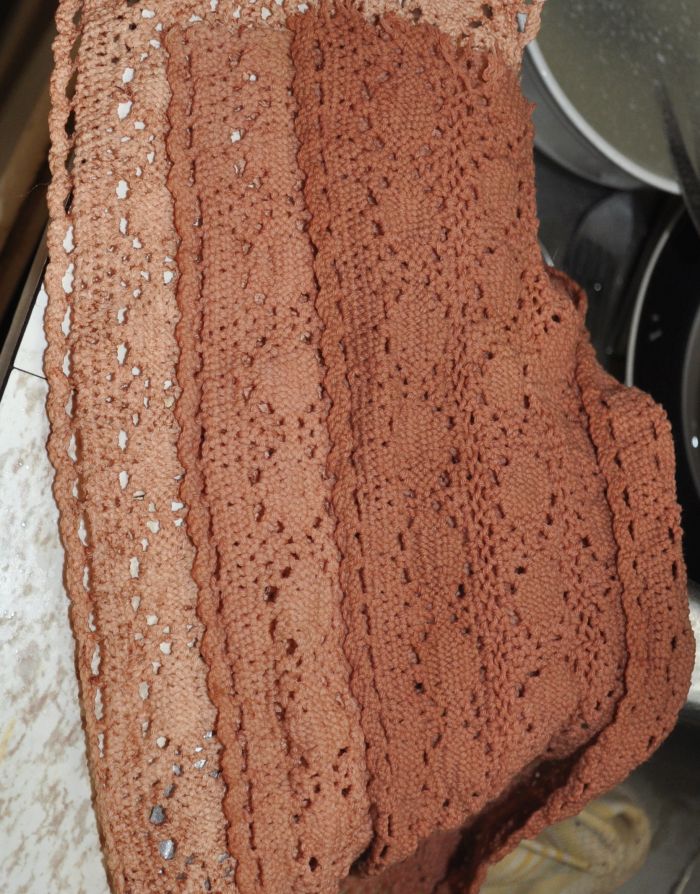
Recommended WOF being 20 to 50%, i used 30%. These fibres have been previously mordanted, with the exception of the lace far right.
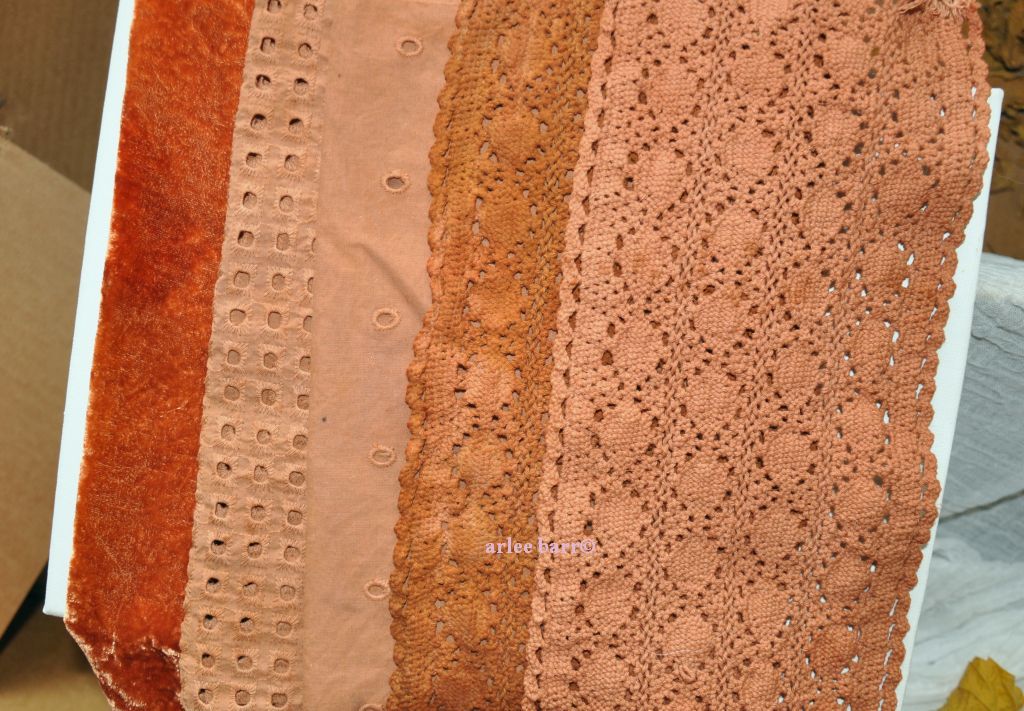 I’d call most of these “mocha”, maybe even “mocha coral” :), vintagey, homey, warm and soft. The silk velvet obviously did the best at uptake, a rich foxy shade.
~~~~~~~~~~~~
That cotton lace is a dense, heavily “woven” chunk. And when i say “woven”, yes i am aware that lace is more a thread manipulating process than weaving. I’d love to see the machines that wind these threads into these patterns! BUT, yesterday when i took the darkest piece out in the sun to check the actual colour, WHOA!!!!!!!!!!!!!
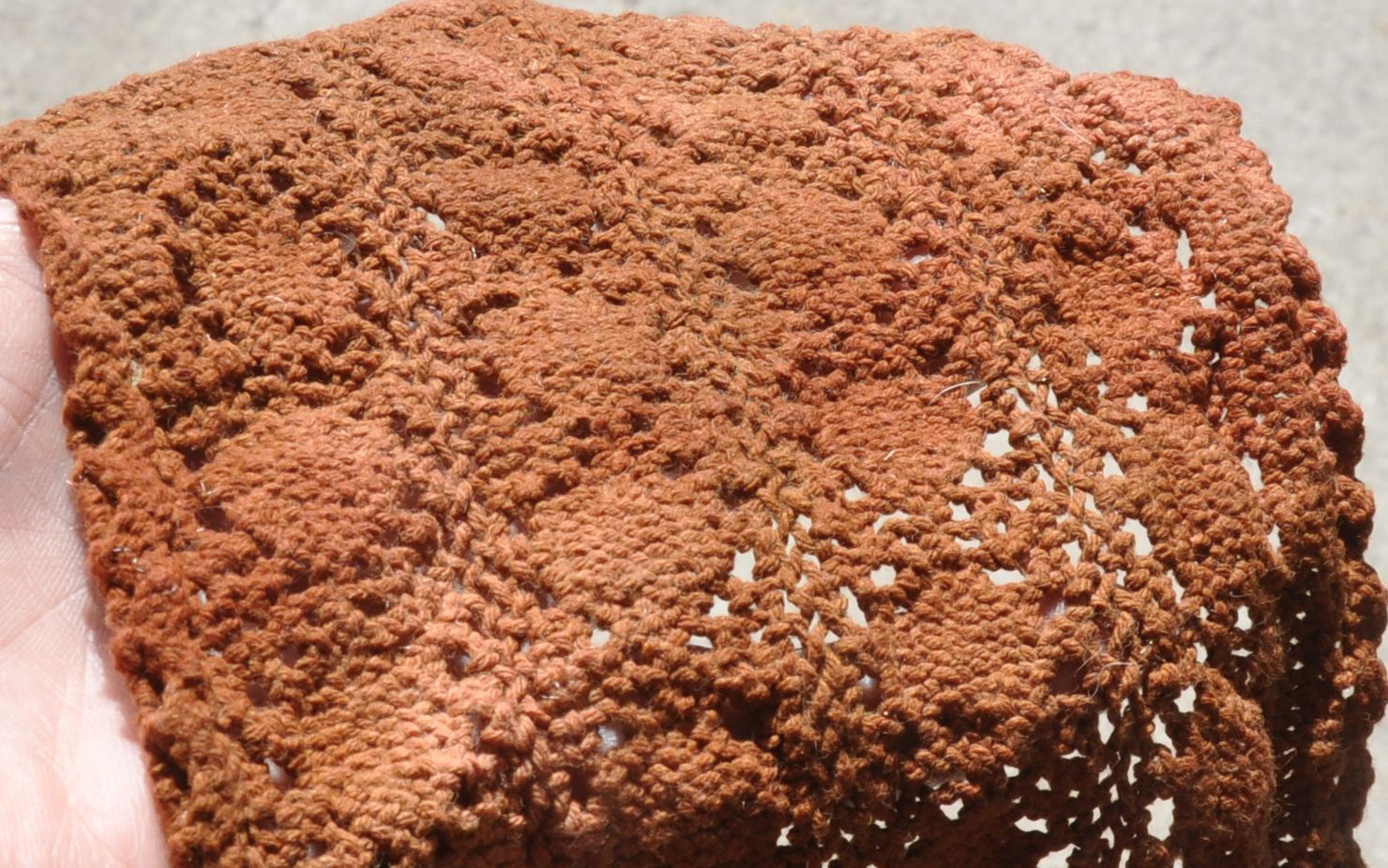 Yes, this is 100% cotton—except for the trapped fibres of plastic/synthetic in it: see the shiny bits, especially at left and top? Plastic is SO prevalent and polluting in our world, and we tend to take for granted that when we buy cotton, it will be uncontaminated by synthetics, but i’m guessing this place either makes synthetic laces as well, or fibres from plastic packaging of the original cotton getting trapped in the machine. Perhaps we should ask now for labels that say “made in a facility where nuts, gluten, what, soy and plastics are also used/manufactured….”
The newest “trend” in fabrics is abhorrent: hyberole and gimmick, targeting and misconception/deception are really heavy in these so called “organic” fabrics. I don’t care if it’s made from rose petals/rose waste, white pine, eucalyptus, bamboo, oranges or frickin fairy wings; it’s viscose/rayon, a fibre made from MANY different cellulose fibres (all plants are cellulose!), and the process is shockingly chemical laden, severely toxic and horrendously polluting. If i put a random pile of rayon fabrics in front of you, you would not be able to tell what was made from rose petals, or rotten rare spotted himalayan feather orchids…..I find it quite disgusting any company calling these sustainable, organic, vegan or eco-conscious, and just as disturbing that uninformed buyers clear this stuff out like it’s made from gossamer wings and moonbeams. I made the decision a long time ago to not buy or use rayon, as it’s nasty stuff period. There’s no such thing as “good quality” rayon, and even if there were, it ain’t coming in my studio! Don’t fall for makers that tell you these products are leaving no toxic footprint, educate them, but don’t don’t don’t buy.
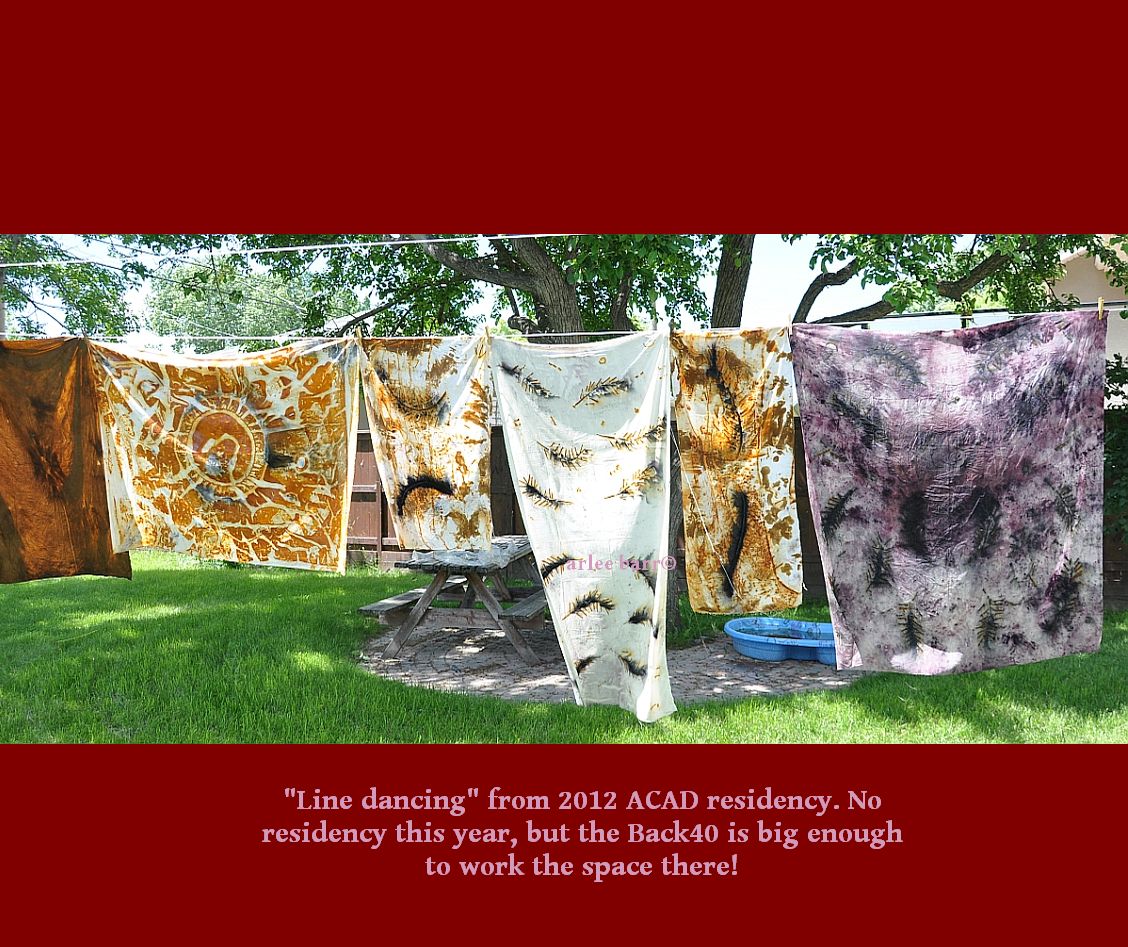
The current “line dance” is all whites and creams as i prep with scouring and premordanting. Packs and big pieces coming soon! New dyes to work with, new fabric types, the Back40 will be a workshop space this summer!
“Autumn after all is not just a time of endings, but of rich harvests and warm gatherings.” October 2017
So, now she is all colour, not rust and neutrals.
BUT. OH-OH. *NOW* we think of stay-stitching ALL edges????? Lesson apparently not learned well enough very long ago: bias stretches. Bias stretches a LOT. A LOT of LOT. Especially when it gets washed, dyed, washed, overdyed and hung to dry……
There’s a hell of a lot more space between edges now than i had envisioned. (This is a loose pin job, but even if i wonked her in there “correctly”, there’s still more space than originally “planned”……..) Shrug. More embroidery to add. (Oh darn.) I’ll also have to slightly, daintily, delicately manipulate by slight dainty delicate gathering to fit sides together, especially at the leg area.
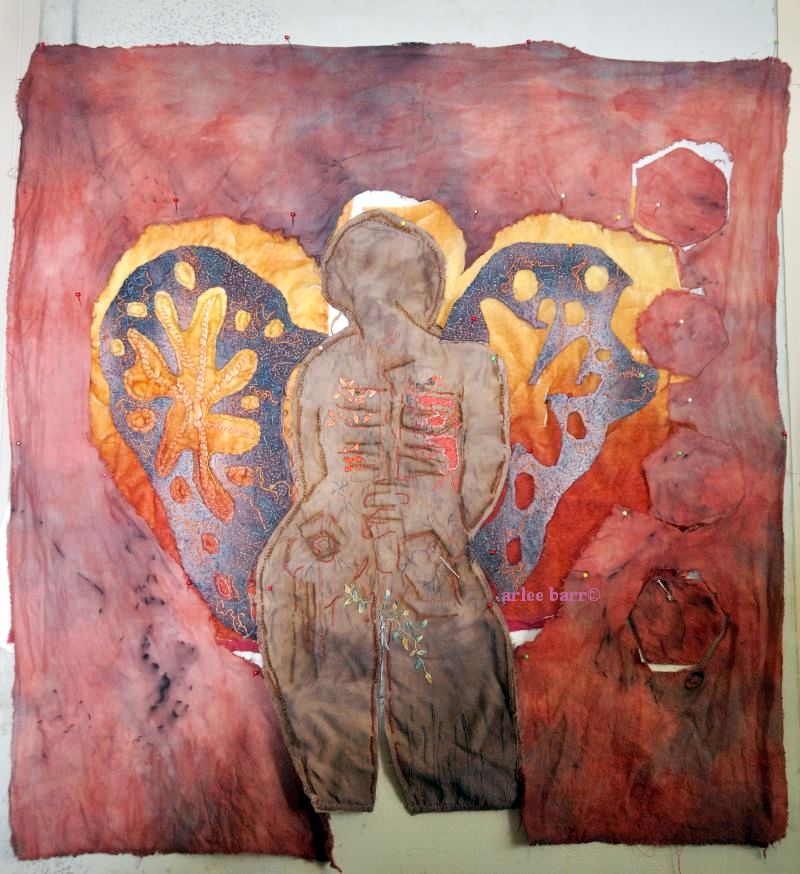
However, we are happy to be working with each other again.
I pulled out the original 2014 sketch that started all this.
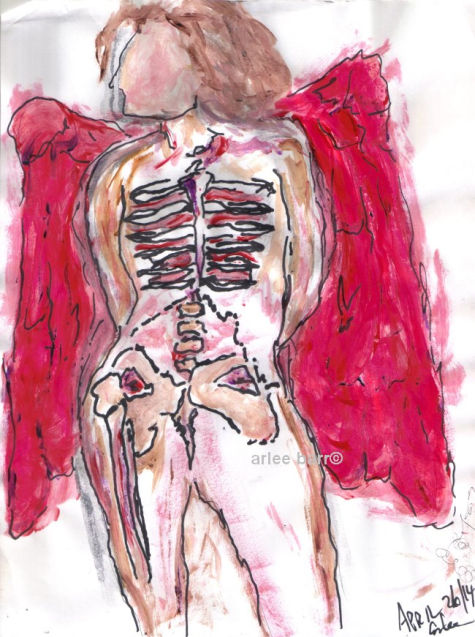
Not quite as many “holes” in this version:
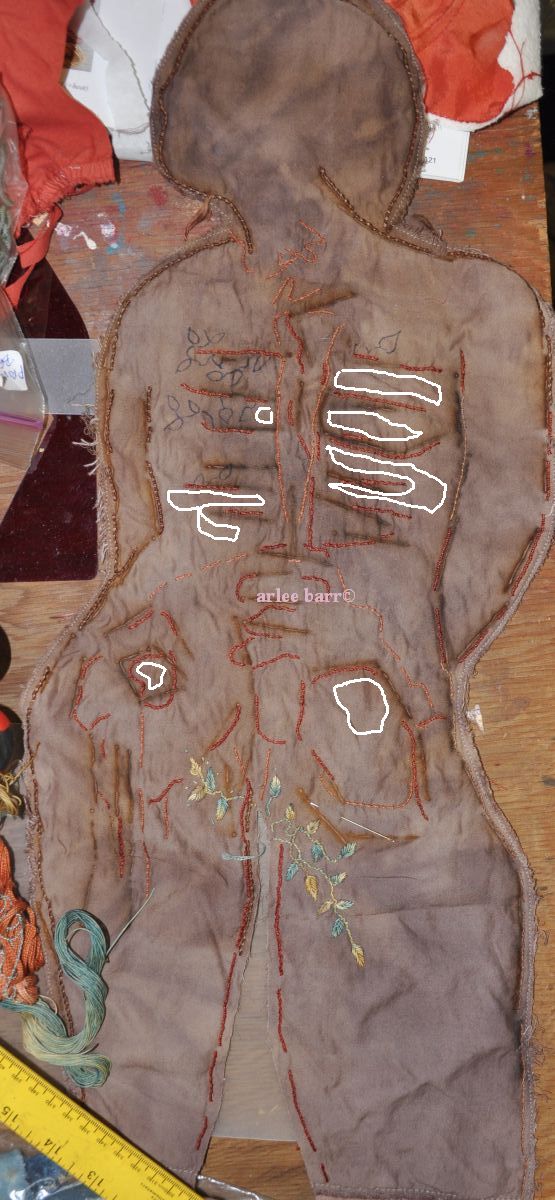
But there will be some:

Someday, i’ll do a more faithful interpretation of that sketch. Maybe the Next Big Thing, as i love those red wings also.
(Remember, all photos are clickable for details.)
UPDATED Oct 7/20
Oh, but it’s a pretty colour anyways.
Well, i can always overdye it.
But it was/looked clean when i bought it to dye.
It doesn’t matter, my clients like this colour.
But Famous Author *always* does this.
I don’t wash these anyways.
Did too scour: I washed this with my socks, before i dyed it.
Vinegar is too a mordant, you freak.
You’re just jealous i got dye from strawberries, ______, _______ and _____. (Insert appropriate inappropriate plant material here.) (This is usually said when said player has it explained to them, that even mordanting will not “fix” fugitive dyes.)
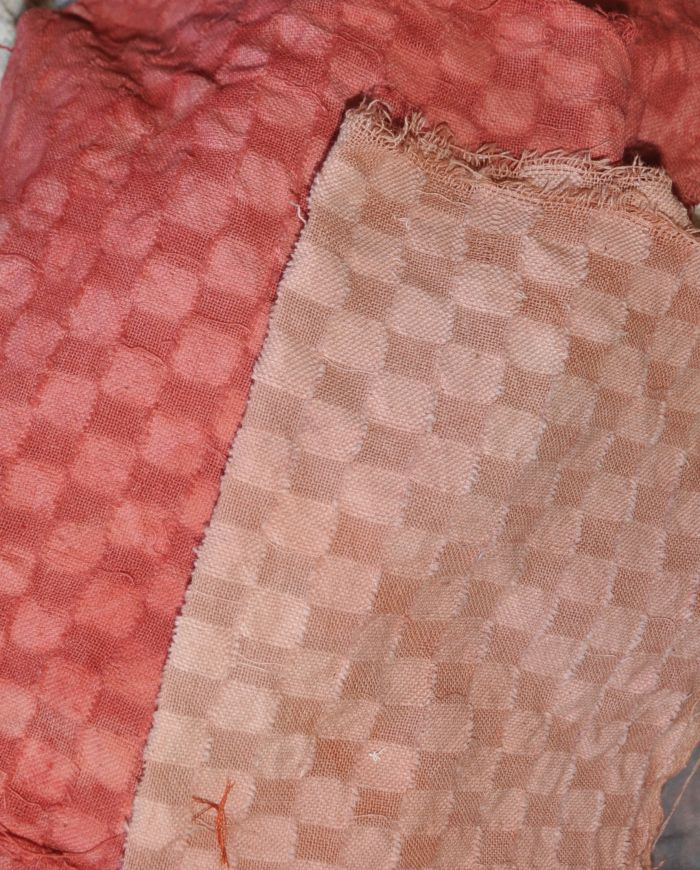
Here’s why you should scour, and pre mordant. Left to right: unwashed cotton, dye didn’t penetrate completely, many white spots visible, stiff as a f*****g board. Next, scoured only (soft as a baby’s butt!!!), no mordant, some colour uptake. Last, scoured and premordanted, deeper colour uptake. All were dyed in same pot of quebracho rojo, at the same time.
 And please “but the colour is so pretty anyways” is not a good way to dye: the colours on the unscoured and unmordanted especially will/did wash out and will continue to do so, the scoured only will lose most of its colour with each subsequent wash, while the scoured and mordanted piece will keep its colour. And even “new” fibres that look clean need scouring.
Below cotton also, left scoured and mordanted, right scoured but no mordant.
A perfect example of what happens if you don’t scour properly, lesson learned in June last year:
I thought i had done enough on a new thread, but when i put them in tannin, this happened:
GREEN?????? I contacted Maiwa, my trusted supplier, and asked if perhaps it had been the soda ash in the initial scouring that had reacted (maybe not rinsed enough), as gallnut is a clear tannin, and stays to the “browner” tones after being used and stored. Nope.
Hi Arlee,
This is rare but it does happen, but it is not from the soda ash. Fabrics are often pretreated and contain substances which can leach out or react with the mordant. When used on it’s own Maiwa’s gallnut extract is usually a clear/colourless tannin. I would suggest trying other cotton fibres from different sources and comparing the results.
Best,
Danielle
I had to REALLY scour again, properly, to get the green out of the threads! And it’s not that these were second hand or cheap threads–they were brand new, brand name, tightly plastic packaged and tightly boxed for shipment. Subsequent threads scouring has given baths of brown, yellow and absurdly, PINK. SCOUR YOUR THREADS TOO! Don’t skimp on this step. Even “PFD” (prepared for dyeing) fabric in MY opinion should be scoured—a. it’s been “prepared” for synthetic dyes, and b. you don’t know how much it’s been dragged over warehouse floors, handled, packed or shipped. (MMM, someone had tacos for lunch and wiped their fingers on the silk. SHARESIES!)
After scouring, I mordant EVERYTHING, according to fibre type. I *know* substantive dyes like indigo and walnut don’t require mordanting, but given that i use a lot of dyes that do need it, i’d rather have everything pre-done in case i grab the wrong chunk. Pre mordanting will not hurt substantive dyes. Some may be stripped out by a chemical indigo vat, but you should mordant again after indigo if you are going to overdye with another natural dye.
EDIT: Oct 7/20 Here’s another object lesson from my Dye Dungeon. I bought brand new white cotton velveteen, and lazily scoured it only once, and for only 45 minutes. I hung it to dry, and in the morning, THIS was on the floor:
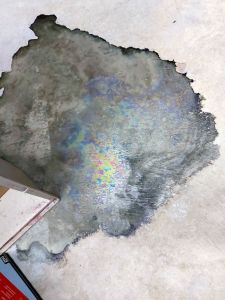
I don’t know what textile additive this was, but i suspect because of the oil like iridiscent sheen it was a solvent, or other petroleum based product, something that is definitely not coming out easily, and that would certainly inhibit the uptake of mordants and dyes. I had wondered why the fabric took up very little dye:
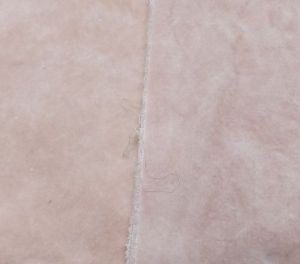 This “should” have been a deep rich colour, as it had been properly premordanted according to fibretype.
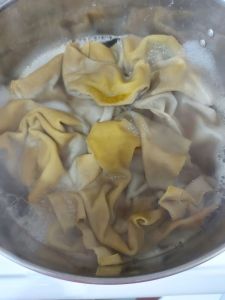
So i threw it back in a big pot, and as soon as it started boiling (above photo), i knew there was still a lot of crud in it. At the end of the first hour long boil up, it looked like i was using a walnut dyebath–it was that dark and disgusting! It took 2 more boils at 45 minutes each, each successive pot with 2 heaping tablespoons of Borax, 2 of soda ash and some neutral soap, to get the water clear. (J.Liles recommends some fabrics be boiled up to 4 hours!)
There must have been a hell of a lot of fibre additives, because the snow white fabric i initially started with is now a lovely CREAM. That’s okay though, still a good base colour, and significantly, the plushness is softer and thicker feeling, probably due to shrinkage. (Be aware that scouring can shrink things as well, and better to know *before* you make plans than after and have lost 2-15% length or width!) Note too, the cleaning aspect i used is for CELLULOSE only. Soda ash will destroy proteins, and i doubt Borax is good for them either.
While we all know (or should if you do a little research) is that textile manufacturing is loaded with chemicals, whether it’s naturals or synthetics. Not all are done in one dedicated plant that does “only” synthetics, “only” naturals, and i suspect few that are “ONLY” “organic”. (Fact in case, that cotton lace in the first photo, had some suspiciously plastic filaments stuck in it, meaning the factory had produced synthetic laces as well, either on the same machine before, or near by on another run.) Some of the chemicals are cleaners, some are part OF the fabric, some are added after to give weight, sheen, dyeability and effect, and a lot of them ARE in our natural fibres, whether you think them clean or not. LINK> This will tell you how many additives and processes are used, most of the time. I remember when i was a young teenager, some fabrics *smelled REALLY weird”—turns out it was formaldehyde! I have friends who still can’t go in fabric stores because of their health conditions and all these chemicals.
HOW to scour? Maiwa: https://cdn.shopify.com/s/files/1/1086/6542/files/natural_dyeing.pdf?2077475857497476456 NOTE: different scour methods for cellulose vs protein fibres. I use neutral soap and soda ash, or neutral soap and borax, or just neutral soap, depending on what i have handy, and depending on the fibre type.
HOW to mordant? Maiwa: https://cdn.shopify.com/s/files/1/1086/6542/files/natural_dyeing.pdf?2077475857497476456 I sometimes add a tannin step to protein fibres, not because they need it, but because they will extend the colour possibilities.
Yes, they are the same link. Maiwa has the BEST, FREE information available that is accurate, researched and trustworthy. Save the link, print it, share it, USE it.
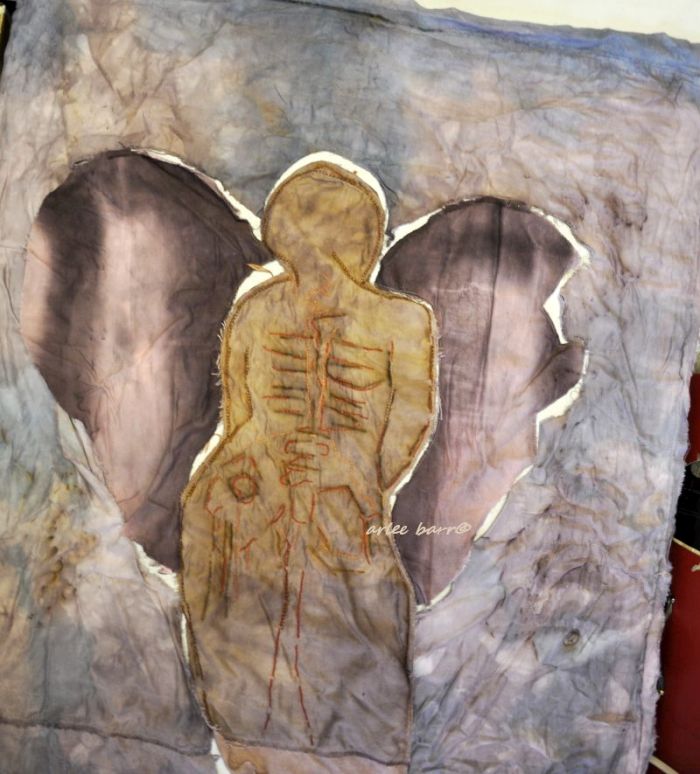
I don’t know WHAT it is about this piece that keeps stalling work. I LOVE the idea, the form, the work so far (with a few minor colour quibbles), but she’s been pinned to the design wall again for 6 months with no more stitching done.
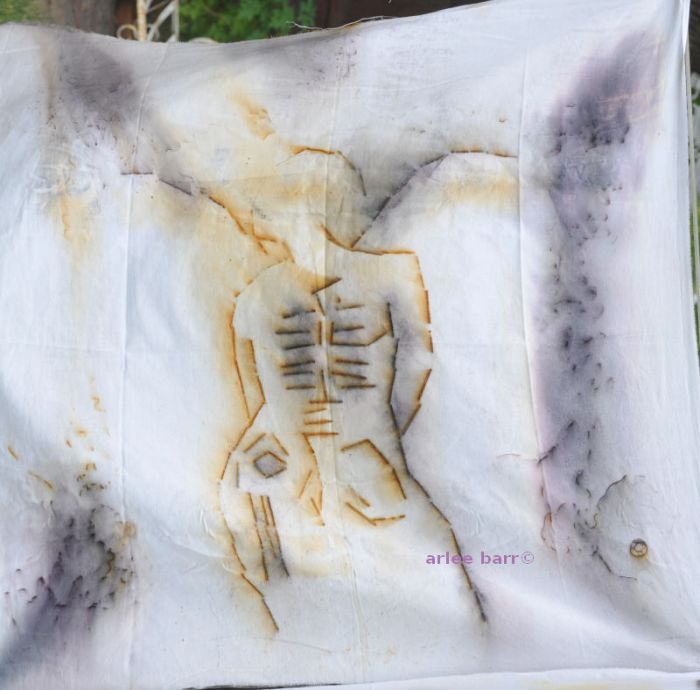
She started like this, created during my ACAD residency in 2016:
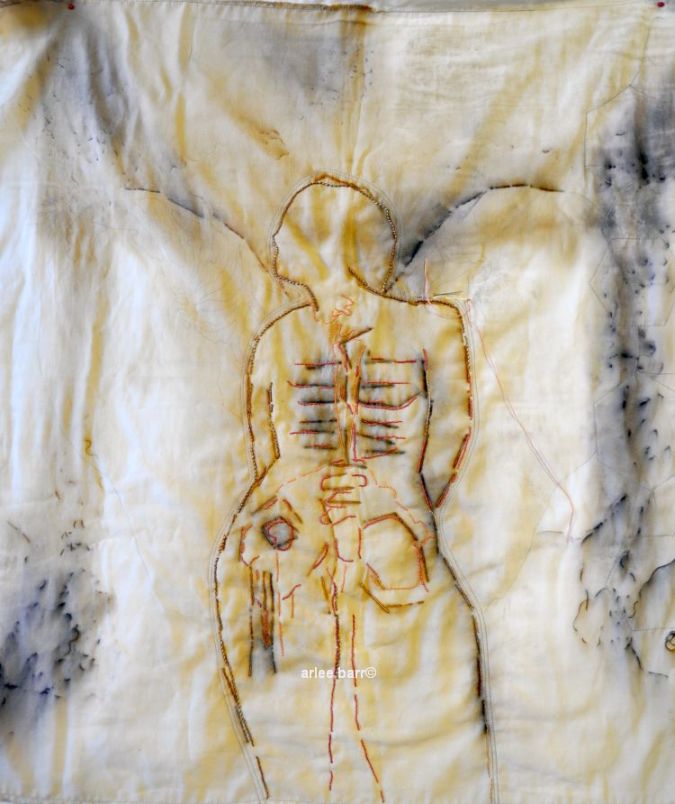
In August of 2017, she had this much (little!) work done on her:
Rolled up and stuffed away, until i got ruthless in October of 2018 and cut her into pieces:
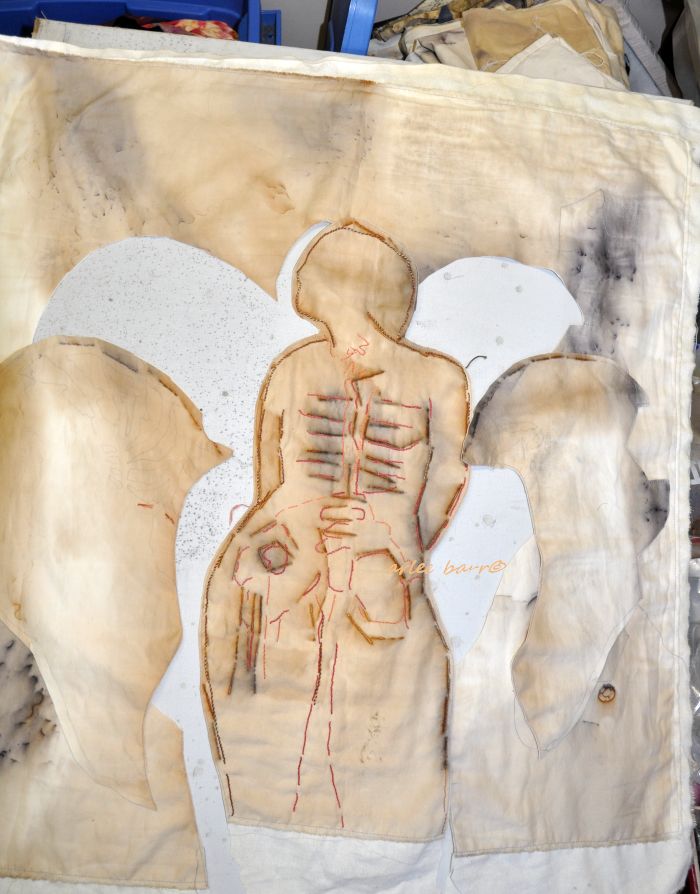
She got this treatment also in October of 2018: body dyed in osage, wings in madder (the iron on this really purpled it!), and the background tossed in a weak indigo vat. (The iron of course affected the osage as well, browning it, which is okay because a bright yellow body would be NFWay 🙂 )
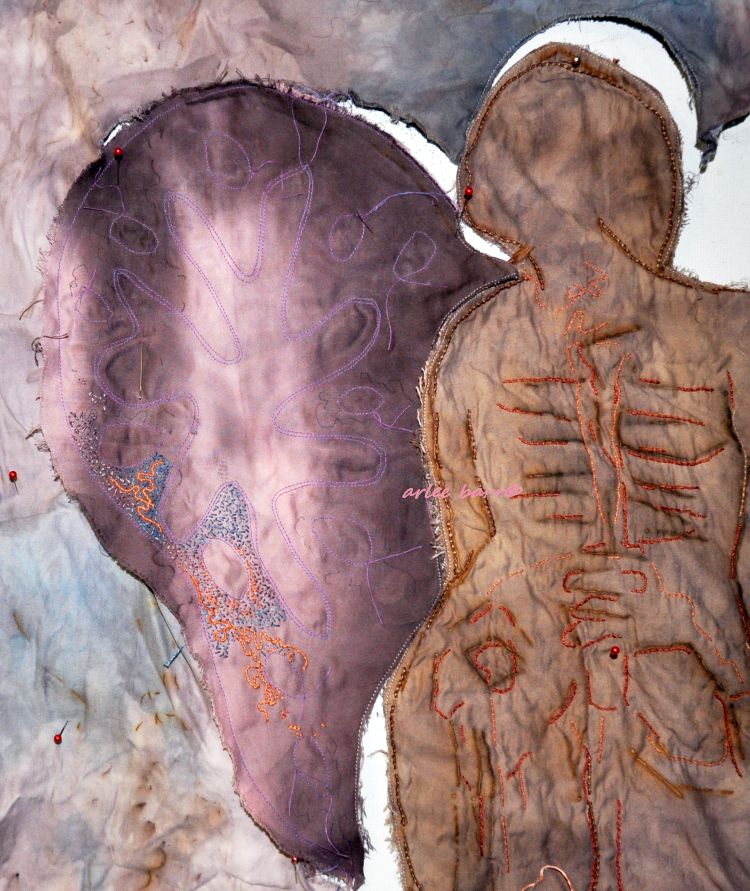
In November, i start stitching the wings and the thread colours really livened up that dark purple:
And the finished wing (mocked in crudely) had ZING when backed with some of my naturally dyed silk velvet:
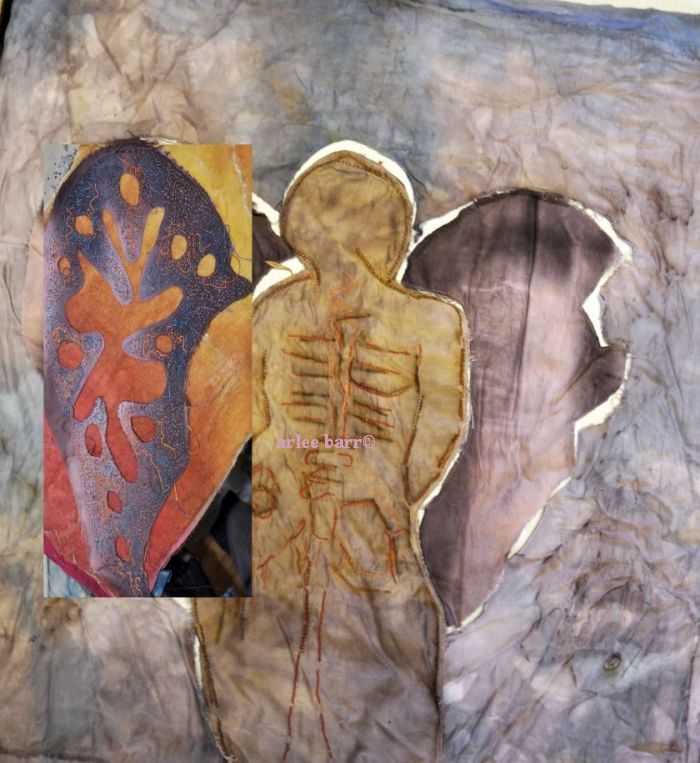 Like this:
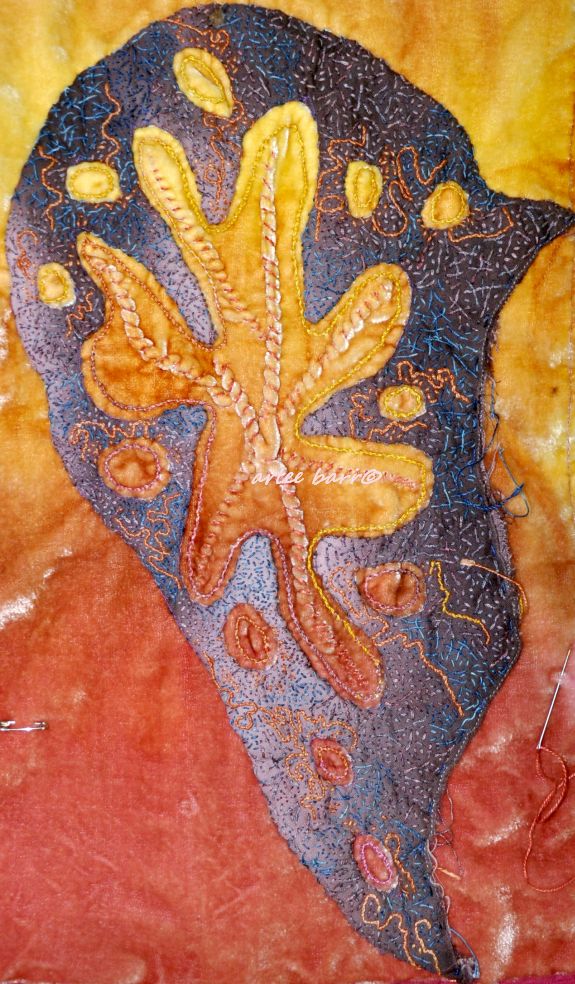 The second wing was done in November also, but is STILL not attached to the velvet backing. SIGH.
But, looking at her last week, the background still seems both dark and weak at the same time. So, i got brave again–because it took some teeth gritting and hoofie crossing when i cut her into pieces the first time—pulled the background off its stabilizer, mordanted the cotton with tannin and alum because even though gawdz knows there’s already a lot of iron on it, cellulose fibres do better taking up dye with these premordants, and threw it in a fresh pot of the 34 year old madder.
And so:
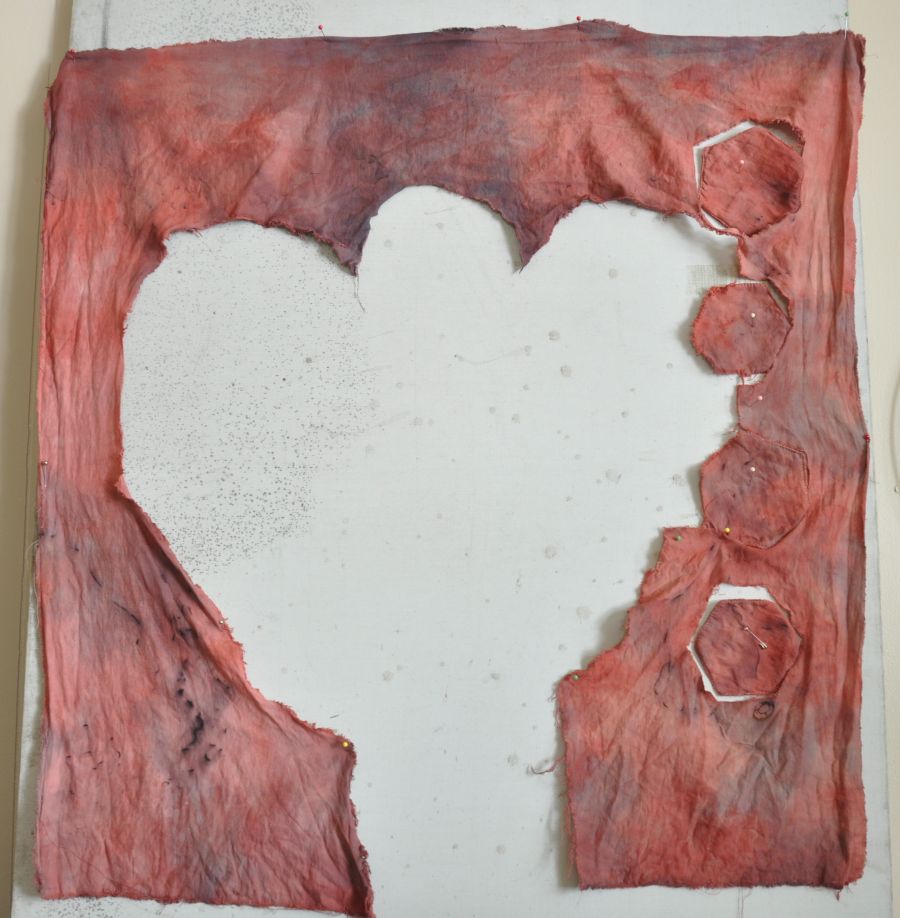
This has been scoured, rusted, washed, dyed, washed, mordanted, and overdyed again, so why now? Ah well, just means more beautiful fabrics behind the hexes, peeking out.
And of course, part of me is incredulous that all the rust and cream coloured fabric is now “gone”, but that’s how it goes. Because you know what? She has a sister! (I did TWO pieces like this during the 2016 session.)
I’m thinking too, her body is much like a husk at the moment, but husks hide secrets that are revealed through peeling away layers. Things escape husks as well, corn silk, seeds, errant old petals. We’ll go with that and see how she evolves there:
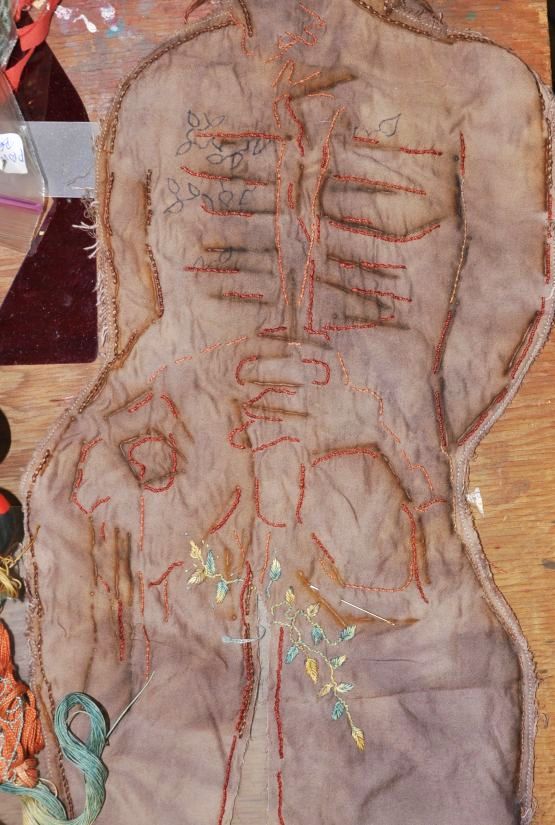
(Something else i realized too: if and when she is ever finished, this will be the first big piece i have done with all natural dyes, from fabric to threads.)
Bets on when she actually soars?
 albedo too
You must be logged in to post a comment.