Posted in eucalyptus, FybreSpace the shop, lac, Madder, Natural Dyes, Naturally dyed threads, quebracho rojo, solidago, tansy

the PHD post (Piling it Higher and Deeper), and shop update

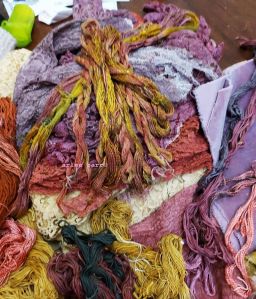
I’m not hoarding, but it’s starting to look like that in my studio: piles and slipping stacks of various fabrics and colours, snarls and twangles of thread in more fibres and colours, and nowhere to move or work!

There’s so much here that i will never use–and never mind how much UNdyed i have still to work through! I’ve been putting aside small packs for myself with the intention of Making, but this time i slipped in notes and sketches so i wouldn’t forget what was so all fired fascinating about the selection at the time 🙂

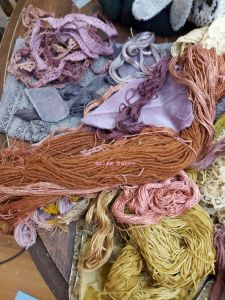
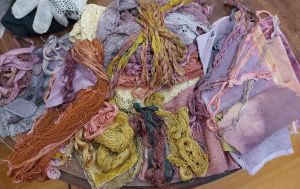
So….threads and fabric packs now in the shop!

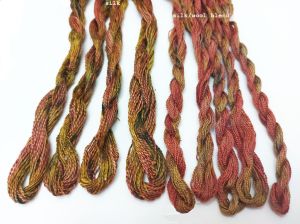
A sampling:

Posted in Deliberation--do something you don't do--or haven't in awhile, lac, Madder, Natural Dyes

working with velveteen

My new favourite type of cotton!

Cotton velveteen has wonderful texture, is firm but malleable enough to manipulate and soaks in natural dye in vintage ways. (It takes a LOT of pre-dyeing steps to get it to absorb dyes correctly, due to the nap.)


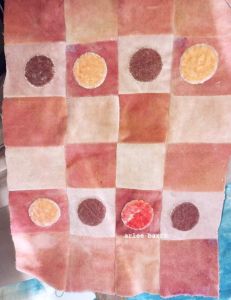
Oops, put the wrong size of coral moon on the end of the top row–better go through those storage jars and check sizes! This was my sample piece, and i see a few areas where my measurements were a *wee* bit off. Three colours of velveteen used in above and two in the second piece below:


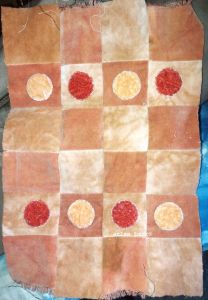
Much better seam matching, and the silk velvet circles are even across *their* colours.  These two chunks are 8×10″. I haven’t quite decided yet whether they need some simple embroidery or some beading to accent the circles.


Posted in eucalyptus, lac, Natural Dyes, Naturally dyed threads

new threads, and the hunt for the elusive lavender

YUMMERS.

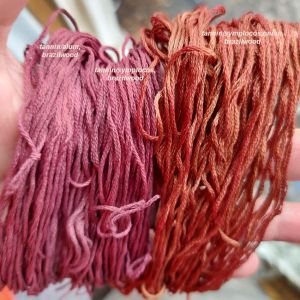
Below lac, brazilwood (sappanwood), and onion, and combos:
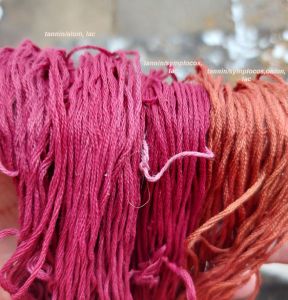
 

A comparison of the previously dyed onion:
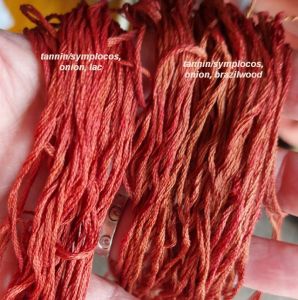
Some of these will be in the shop, announcement to be made when listed 🙂 Obviously being as delicious as they are, i have reserved some for a special person: ME!

The onion gives greener tones initially, but there doesn’t seem to be much difference when overdyed. My lac and BW however were a stronger WOF for these babies, so deeper shades resulted. YUM!

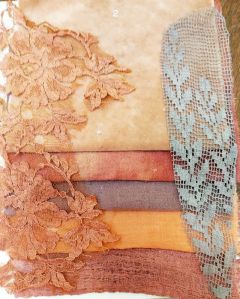
These are from previously used dyebaths, after doing cloth. I don’t waste a drop! From Lac, the natural dye that shows up in searches as anything but a natural dye: lac, lac with iron, and eucalyptus:
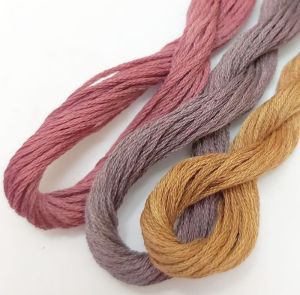
These above are included in a new fabric pack in the shop.

And a combination of the two (because with natural dyes, purple/pink and yellow don’t always make mucky brown):
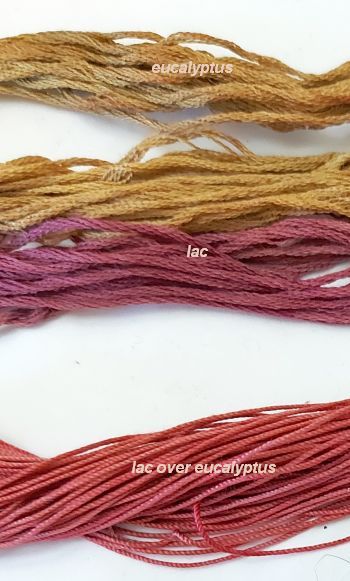
This image has an empty alt attribute; its file name is euc-and-lac-and-combo-b-1.jpg


I have had through my dyeing days (years now, wow!) ONE skein of lavender thread. I don’t remember what i used, but i suspect it was cochineal, and the thread was silk. I’ve been partial to lavender as an accent with rust and neutrals since the days when i first started all the hand stitching. The ones i used below are commercial, but there’s no reason not to try for a natural version. The purples and lavenders on the fabrics however IS natural, from Brazilwood, and i covet those various shades!

Mother’s Heart, 2013:
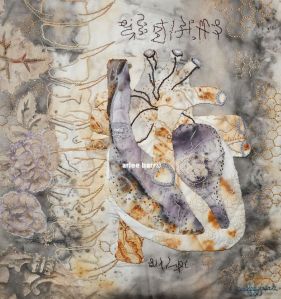
The a Difference Between A Plum, detail, 2013:
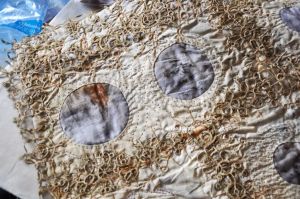
Strange Soul Take Flight, detail, in progress, 2013:
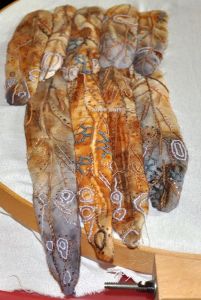
(2013 was a very productive year…..)

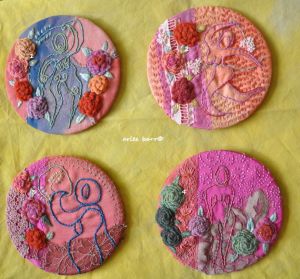
The Mini Goddess Moons, 2018, lavender leaves on 3 of them. (These are *completely” done in natural dyes, both fabric and threads.) I like the way the lavender gleams amongst all the stronger natural dye colours.
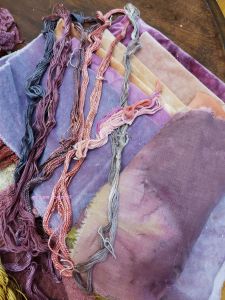
 I suspect it’s time to get the cochineal out and try weaker solutions to get that glowing shiny shade!


Posted in Ecoprints and Natural Dyes, lac, logwood, Madder, Natural Dyes, osage

taken to task….

From the PM i got, someone (some many?) thinks my bad avocado results are because i don’t know what i’m doing………

I beg to differ. Cotton is one of the hardest fibres to get good results on, with natural dyes. I follow Maiwa’s insightful, clear, well researched methods, from scouring to mordanting to dye procedures for each dye. (Don’t lump all together, as each one usually requires a different set of parameters!) My results before this were lousy, but these instructions became my “go to”. (My other trusted source is anything by Jenny Dean.)

You’ve seen these before, but for the person/s who have taken me to task, eat your words please.

My ecoprints on cotton are rather spectacular too, if i do say so myself.

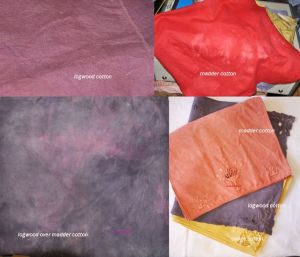
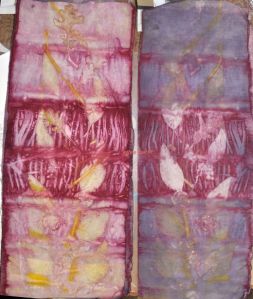
Lac and logwood on cotton, with eucalyptus leaves, oak leaves and osage strips.

So, let’s see *your* results then, Miss/’s.