For a couple of years now, i’ve had an idea in my head for a special garment, after seeing something in a trendy boutique window that fired some desire for a similar “Objay Dart” (aka Objet d’art). It was in reds, all patchy and flowing, bohemian though unadorned with any embellishments, simply cut and extremely Spendy. I filed the idea away, as i haven’t made even a pair of pyjama pants in the last 7 years.
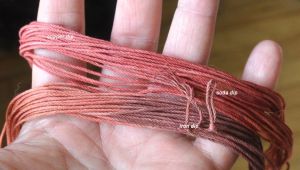
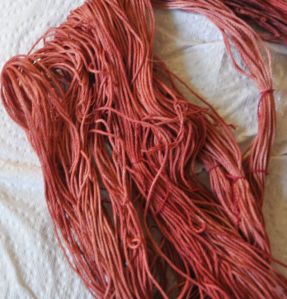
But what’s this? There seems to be a plethora of chunks of fabric, all dyed recently, in the madder summer experiment pot. And threads in various shades as well. EUREKA.
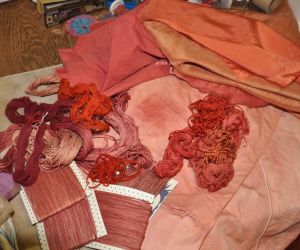
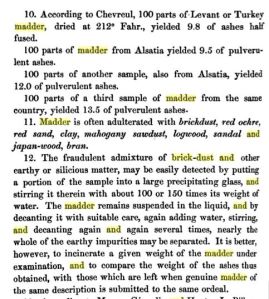
I do have more fabrics, but have to dig through some serious piles first! I’m picking up a package from Maiwa today too, which includes more madder, because even though i intend to use up the 33 year old madder currently in the pot, and the tons still left in that bag, i think the best red was from Maiwa. Two madder pots then!
I used to make wearable art, even had a moderately successful small business for 6 years, selling through local boutiques and “Craft fairs”, so i’m experienced enough a designer and construction-ist (i hate the word seamstress…), that i know the cut of this is going to be important. Cotton, at least most of the cotton i have, is not terribly drapey. They’re not stiff slices either, but with not a lot of movement in them, the design has to accommodate that fact and the silk additions, which are drapey. I might go on the bias with some of them though, as that helps a bit with flow.
I could of course just draft my own design, but i pulled out my only Tina Givens pattern, and had a look at that.
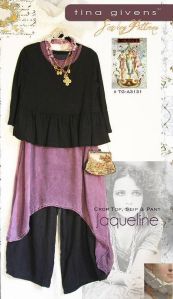 Hmm, slip “too” biasy, pants too much fabric. The crop top however might work, but i may forgo the ruffled detail at the bottom, and just lengthen it a bit. Actually, there could be enough silk to do the slip too! OOOOO, wouldn’t that be decandenty-bohemianish-artful-artistry-Artist-y? I tend to live in either leggings and a shirt for work and out-and-about, and a tank and pyjama pants at home! My body has settled into a 60 year old shape (though a “few” pounds could be lost) and i really don’t care to “dress to impress” anyone anymore, but it’s always nice to have something for “good” 🙂
So, though i may have chunks of fabric, and hanks of thread to share in the shop, depending on amounts and time, i will also have something to really show what i’ve been up to. It’s not a daunting project either, as i have no deadline, no rules to follow, and no one to account to. I can do whatever treatment i like to the “patches”, take my time with those as well, enjoy the process (and maybe make learn new skills or at least, new applications of older skills), and go easier on myself in my studio. Perhaps the Muse will return somewhere along the line here, and if not, well, i’ll have some new duds at the least.
***EDIT: For those of us with that 60 year old body, you might want to read this review, with its tips. (Please be aware though that the writer of the post, Lorraine from Calgary, has passed on since…i sure would have liked to have met her in person.)
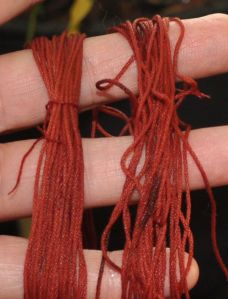
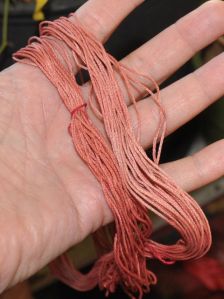
 albedo too
You must be logged in to post a comment.