#Plantdyes. #Naturaldyes. #Botanicaldyes. #Vegetabledyes (????????????????????)
These hashtags drive me up the wall. Use them, sure, but QUALIFY them.
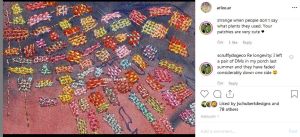
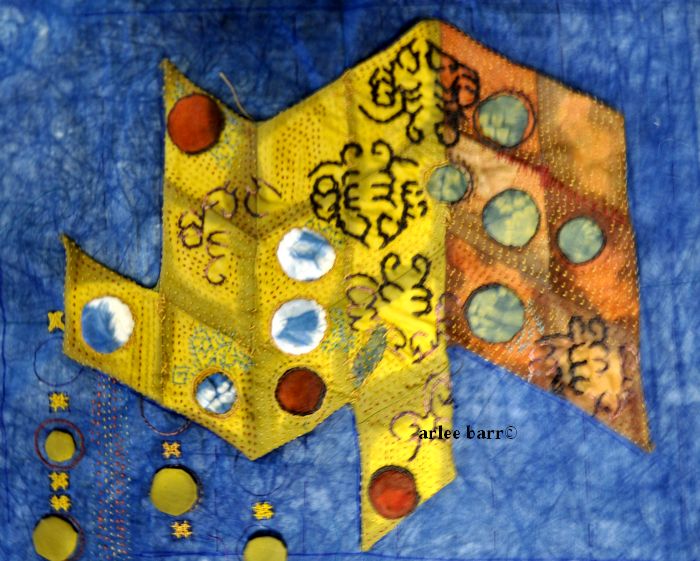
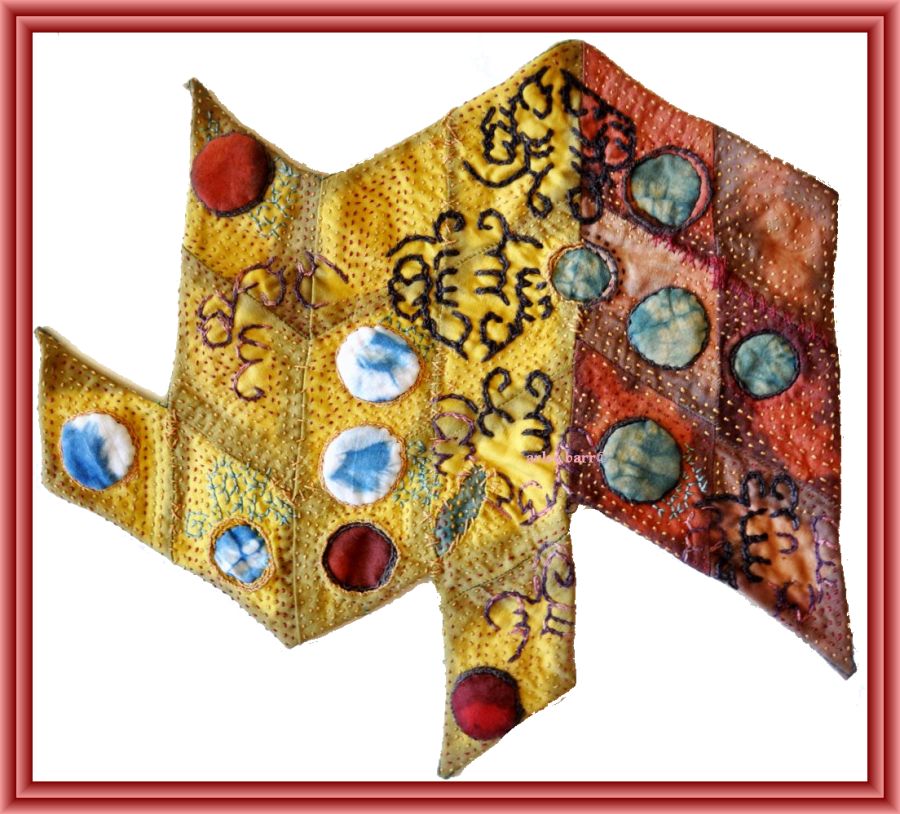
Natural dyes patchies, work in progress. You may have noticed that when I post, I hashtag (edit:or ID) ALL of the dyes i use: when people say “plant dyes”, it doesn’t always mean it’s light or wash fast; in fact it could be fugitive. I pride myself on doing these colours and the subsequent art work made from them correctly, from the start. I make sure my efforts are going to last! The “Beets, Beans and Berries Brigade” can go suck on a turnip 😜 #naturaldyes #plantdyes #cochineal #sandalwood #indigo #logwood #osage #madder #quebrachorojo #naturaldyersofinstagram #yycartist #calgaryarts
I’ve asked people what “natural dye” they used. They don’t answer. I’ve asked to see their lightfast tests. They don’t answer. Or they do answer, huffy because “it’s not going to be washed anyways”. I’ve asked what mordant they’ve used. “What’s a mordant?” or “Vinegar.” Sigh………… I ask precisely because i DO want to know–there are dyes out there that are not Old World, European, Asian, that we know nothing or little about at present. Maybe i could learn something new, but not with these attitudes.
Raspberries, grapes, beets, strawberries, black beans, mint, spinach, daylilies, passionfruit, cherries, rose petals, hibiscus and hollyhock blooms: when we start out, we try these. It’s fun, it’s fast, it’s colourful, pretty, sweet. BUT THEY ARE NOT DYES. I admit it, i used 2 of these things, but only because they were in a book by a dyer i trust. (That dyer has subsequently revised her opinion on them as NOT true dyes. And i threw in the compost the blooms i’d saved.)
I strongly believe that natural dyeing has become such a burgeoning industry, that anyone who has ever seen beet juice stain a tablecloth, suddenly is a natural dyer, writes a book, and sells the product to increasing numbers of gaga followers. Hell, *i* could write a book, and it would be accurate, but since there are already more than enough GOOD, WELL RESEARCHED, RESPECTED authors and books out there, i wouldn’t presume. I don’t have all the answers (yet 🙂 ), but someday i will (have all the answers, not write a book), because i DO the research: i don’t trust anyone who doesn’t address or demonstrate anything about lightfastness, i don’t trust “seasonal colours” when half of them are not real dyes, i don’t trust just because something makes a wonderful ink means it also dyes cloth or threads, i don’t trust anyone who won’t be clear about what they are doing if they are selling it, i will never trust someone who advocates the use of kitchen waste without discerning and explaining the difference between a stain and a dye. I’ve *seen* the beet juice dyed yarn on Etsy, the packages of coloured fabrics on Instagram that have no identifiers. How do i know they are “plant dyes” , not food colouring, or watered paint, or procion, ’cause i ain’t never seen THAT green or deep fuschia from plant materials???? Yeah yeah, i know about mordants and modifiers, but some of the colours i’ve seen do not occur in natural dyestuffs! I just wish more buyers too would call out the frauds, identify problems plainly, and stop the “oh but it’s pretty anyways” crap.
No one wants to bake or buy a cake that looks gorgeous, but is really just icing bewitchingly swirled onto a cardboard base……………
I think what i’m asking for is honesty here. If you take pride in your work, and you know that you know what you are doing, share that. Don’t make people guess, don’t defraud them, don’t lie, cheat, obfuscate. If you write a book, aren’t you supposed to be sharing the real true information, or are you just promoting your own agenda with the artfully staged photos, the vague instructions, the “projects” that take up half the book? Holding the information close to your chest is selfish; if you’re doing it wrong, you will be found out i guess, if you’re doing it right, well, so can someone else. And yeah people copy, of course they copy but with natural dyeing, there are so many factors, that their projects are not going to be copies of your projects no matter how hard they try. If you’re hiding that information so you can sell your books, or your fabrics, and you’ve done it wrong, you will be found out, and there goes not only your bank account, but your reputation and the reputation of natural dyers WHO DO IT RIGHT.
I have been asked for instance, “how did you get that colour from madder?” I’ve answered, “by using it correctly, as per a madder recipe”. I can’t be more specific because there are water, mordant, modifier, fibre type, age of dye stuff, original source of dye stuff, length of time, temperature and Magical Fairy Moon Breathless Goddess factors–and that last one is no artsy fartsy obfuscation, because sometimes there is such a confluence of events to create a colour, that it HAS to be magic. Even this pragmatic skeptic has to admit this.
Don’t skimp on the research yourself, personally. Don’t take at face value one blog post that has a colour you like. Don’t EVER take at face value the most popular as the final word on a subject. (Popularity has nothing to do with actual knowledge.) Compare notes with each source, find the original source. Was it all done correctly from the start? Scouring, mordanting, actual dye material, possible post mordanting and/or modifying, light fast and wash fast tests? (These last two are my biggest peeves–i RARELY see any indication these have been done.)
Ah, i could go on and on.
Maybe most people are more interested in popularity and money, than pride of place, of ethics and honesty, of quality work/art. I’d like to sell more too, because i sure as hell get frustrated when i see those big numbers of sales on stuff that just isn’t made correctly, done poorly, weak. There’s no “sustainability, eco-consciousness, mindfulness” to any of it. I have however found natural dyers who give a damn, who share the info, who are constantly learning, who are nice or snarky (because they too are frustrated) and know their stuff, who will troubleshoot with you. Those are the ones who have the art of transparency in spades (to mix a metaphor).
As usual, i’m probably just pissing into the wind.
I wrote about this before too, in less polite terms 🙂
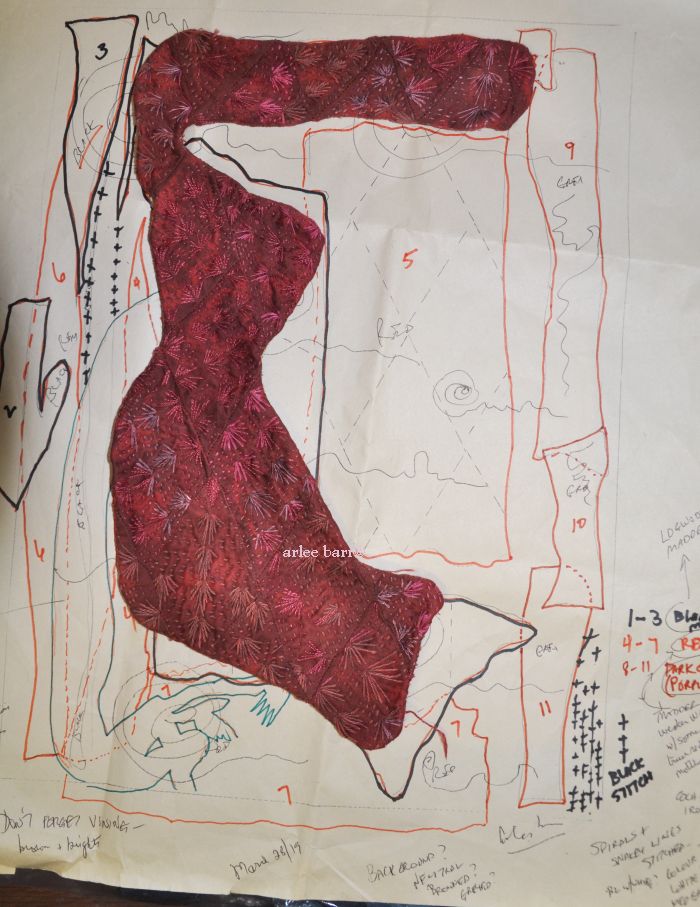
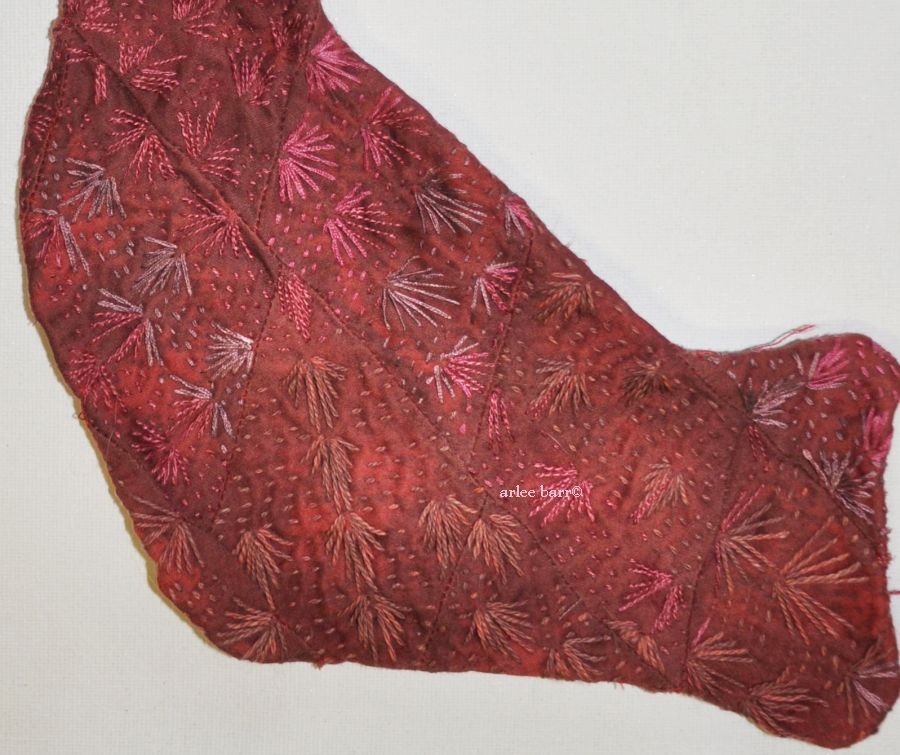
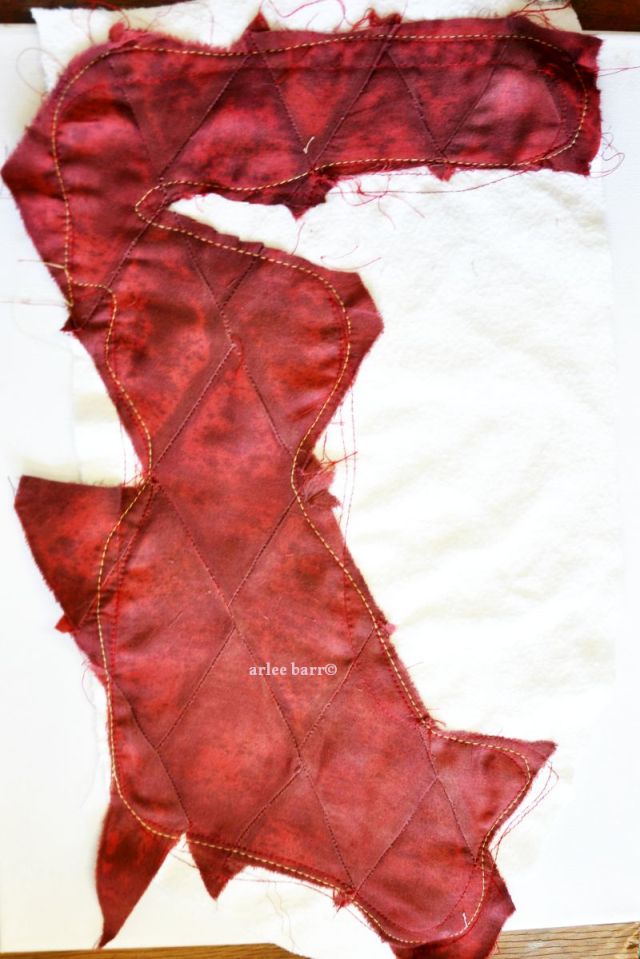
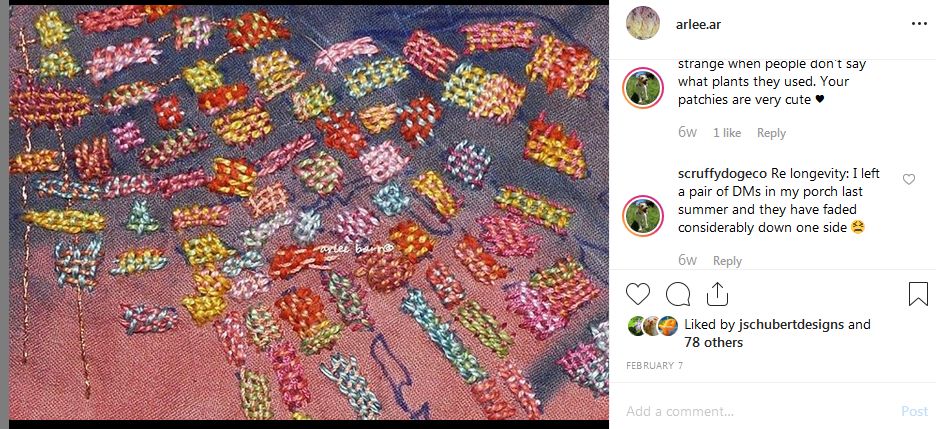
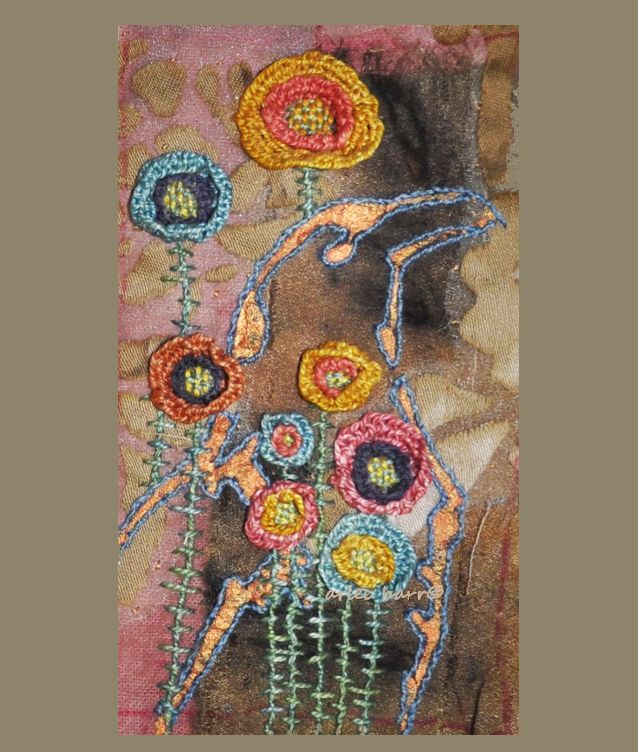
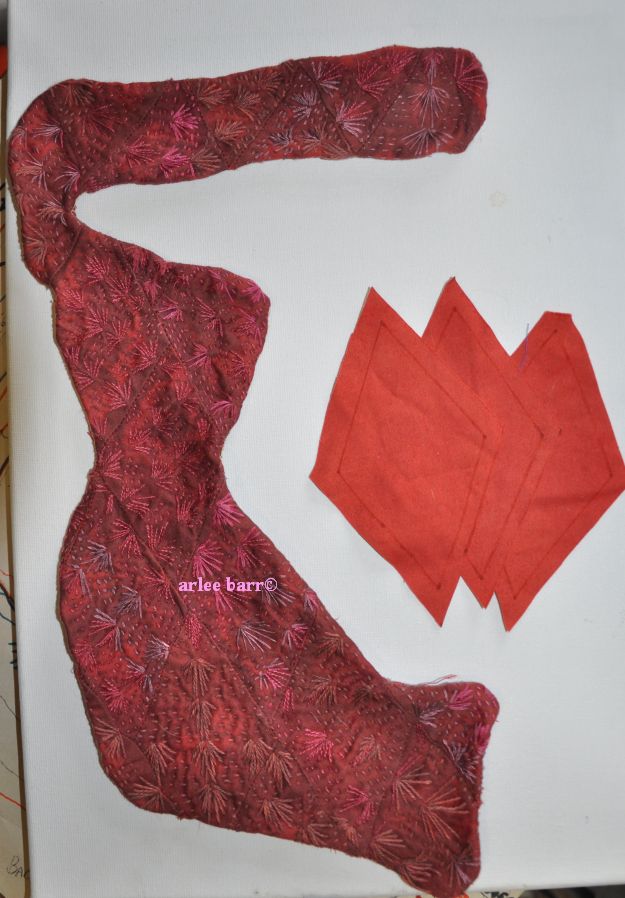 Above, the first section completed. You can see the big difference on that worked section that the iron post modification made on the clear red of the original madder. (Post mod was done before stitching with quebracho rojo, cochineal and madder on silk and cotton threads.)
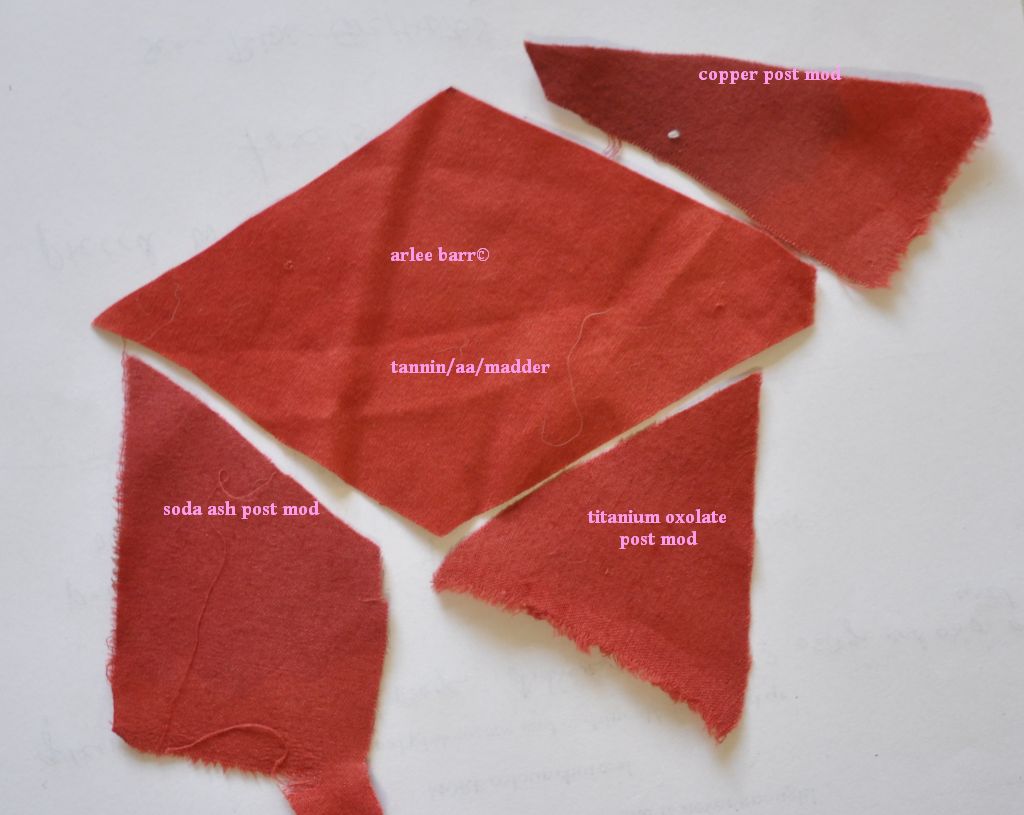 The soda ash dulled the red, the TO made it slightly orangey, and the copper, while darker and similar to the iron used before, is more what i wanted.
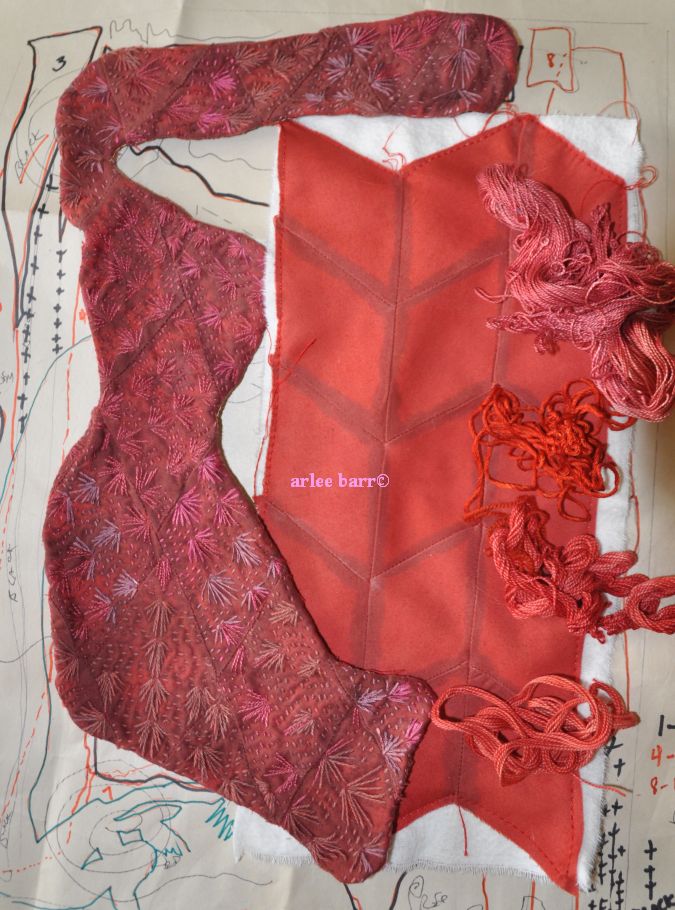 I do have yet to decide which stitches i will use. I don’t want it as tightly massed as the finished section, but not really “open” and loose either.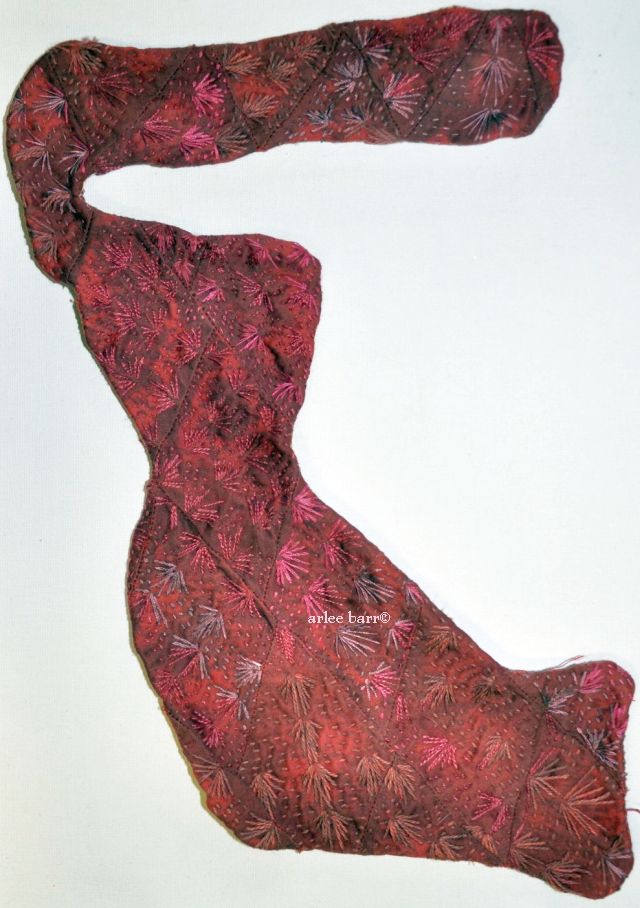

 albedo too
You must be logged in to post a comment.