Posted in Indigo Dreams, Jam Day, Natural Dyes, tansy

cooking with noxious weed control

Just doing my bit to keep invasives from taking over 🙂 Tansy, oh Tansy, i love you, but you’re considered “noxious” here in Alberta. And YES, i get that invasive/non-native weeds plants can be a serious problem. I’m a Nature Girl, but the best Nature is, well, Natural, not “introduced”.

Okay, really, to me, a weed is something that grows in my garden that isn’t edible and/or pretty. I let the purslane and amaranthus go crazy, the millet seeded from the bird feeder, the bindweed in the lawn, the dandilions even. Control is maintained by mowing the Back40 often enough, but not MEGA SHORT (cause A  that’s ugly and B bad practice), so our little nasties there are never taller than 3″. We have a milkweed growing by the side fence where no other garden is, and guard it jealously, as the bees love it, as do other pollinators, and hope and pray that one day, some day we have visits from Monarch butterflies. I don’t think i’ve seen one since i was a child in mid-western Ontario, many many moons ago.
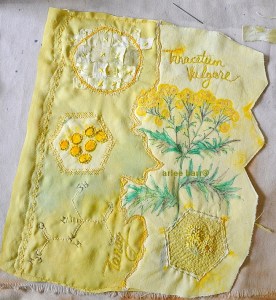
(I should finish this, from 2012…)

BUT, Tansy is really really prevalent here, so i’m ambivalent about the growth, and the destruction of it, as the city and the province would like us to do. On the fence actually, because i cut their pretty little yellow heads off so they can’t set anymore seed, BUT they also reproduce easily from a rhizomatous root. However, because they are so ubiquitous here, i feel no compunction in bringing home bags and bags and bags of decapitated Tanacetum vulgare, to throw in the dyepot fresh, and to dry for future use. The colourfastness is classified as “good””, and with proper mordanting, i don’t worry about its longevity. (Note though, the longest lasting natural yellow is Weld, an ancient–and spendy–dye. Can’t grow my own because it too is a No No here in Alberta.)

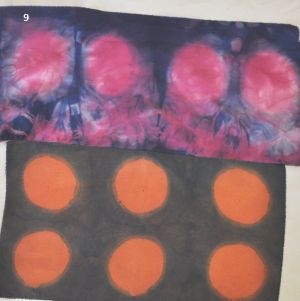
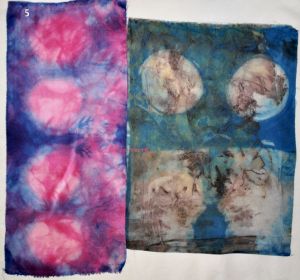
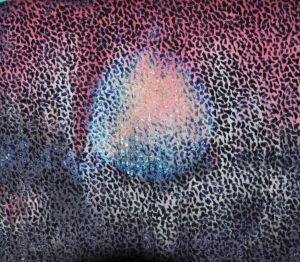
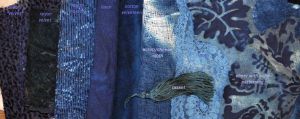
Too, yellow is the most scopic of all natural dye plants, from a multitude of sources, some light and wash fast, some not so much. It is however, if you remember your primary mixing of colour, a good base for oranges (think corals and peaches, not pumpkins 🙂 ), greens (teal! emerald!) and browns (chocolate chocolate chocolate!). The photo i showed here is the reason i picked much of this, and plan on stockpiling fibres as bases for overdyeing. I didn’t get *quite* the greens i wanted, but will keep trying.
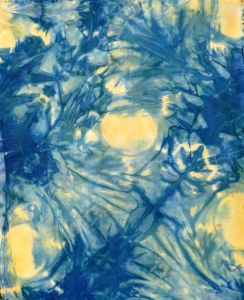
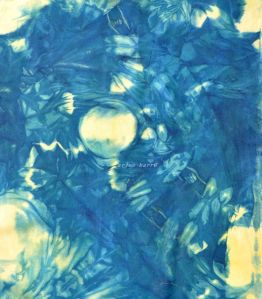
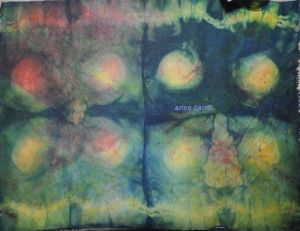
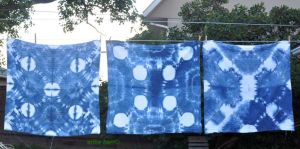
Tansy on bamboo above overdyed (obviously) with indigo.  I’m going to try again with cotton (because i’m out of the bamboo) that took up a load of oxidized tannin, as the yellow uptake was quite strong.

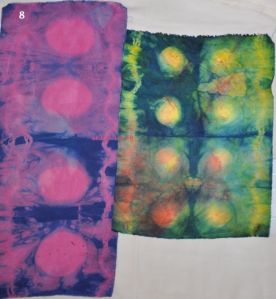
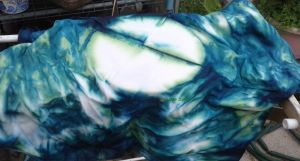
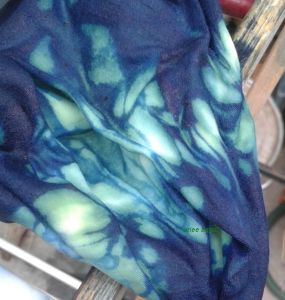
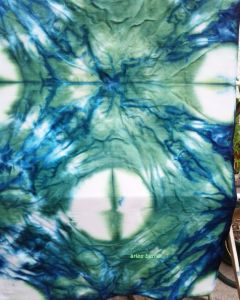
There were more greens in the shibori samples below, but the indigo is now weak, and needs reviving. Ah, to find that happy balance. The tansy dyed cotton was post modifed in, top to bottom soda ash, iron and copper before the indigo dip.
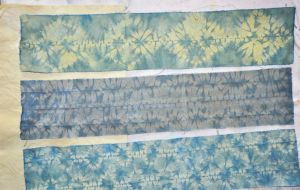
I need to find a disappearing type of marker as well. Even after the “finishing” of these pieces, the pencil i used is still visible, okay for samples, but not for actual work.


And i also want to do this again!
 

Posted in Madder, mordants and modifiers, natural dye research, Natural Dyes, tansy, The Summer of Madder (Study)

gimme the ticket, i’m guilty as hell

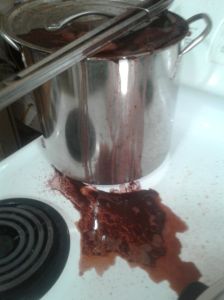
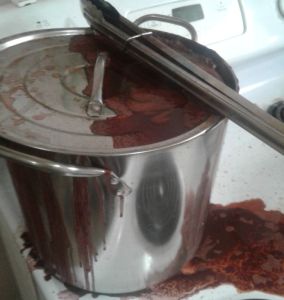
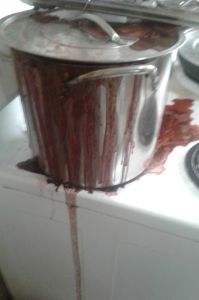
This morning’s madder mess was easily cleaned up with a bit of a bleachy scrub, something that was still out, as earlier in the week i also had an exploding indigo stock solution on the kitchen counter……… Yes, my kitchen could have been red and blue, naturally 🙂

I quickly scurried the pot out to the patio, and with temps being in the high 20C’s and set on concrete, it stayed hot all day. I hucked some cloth in there, just to see what was left, and am glad i did.

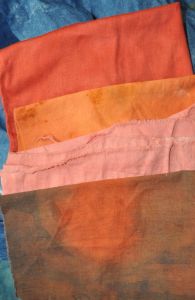
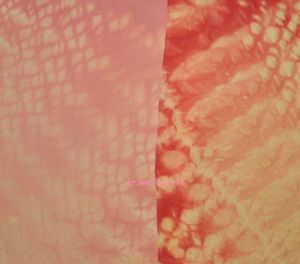
Top, tansy dyed first, then a rusted piece that had been treated with titanium oxalate, an undyed piece, and an indigo over tansy and madder, all previously mordanted with tannin and alum, all cottons:

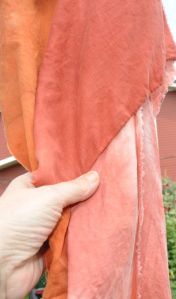
Below, left to right, the TO/rust, the tansy, the undyed:

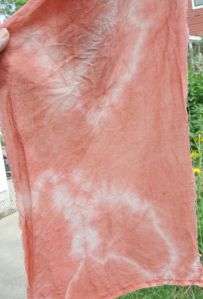
I’d loosely scrunched the undyed–LOVE it.

Waste not, want not!


Posted in Deliberation--do something you don't do--or haven't in awhile, Madder

distracted dyeing ticket…..

good thing the dye police weren’t here……

i’m off in another room, and i smell the sweetest thing, then realize i accidentally hit the stove knob when moving the madder……….

well, it *was* due for a heat up to prevent mold, but.

wonder what colour i’ll get now? (madder isn’t supposed to go above 72C/160F,  but this definitely boiled……)

Posted in Ecoprints and Natural Dyes, FybreSpace the shop, Indigo Dreams, Moons, Natural Dyes, Probably talking to just myself, Work 2018

dot dot matrix (shop update), and the use of poisonous (gasp) plants in the dyepot

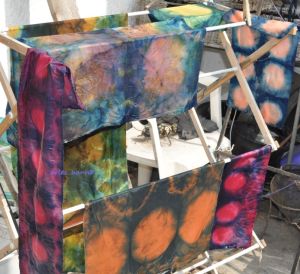
It’s hot, it’s sunny, it’s dry in Calgary, so while that lasts, i’m running a lot of indigo! Some of these babies will be kept for the stash, as i’d like to do an adjunct project with natural dyes this summer, not just the Summer Madder Study! Some will go in the shop***. I have listed only a few to start with, as it takes time to “match up” pieces, so they’re interesting :), and more time to photograph! There are MANY more to list, BUT once the ones in there now are gone, they are GONE, as these are impossible to replicate.


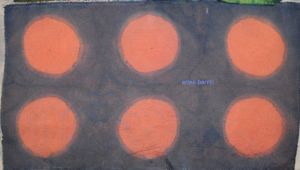
Indigo over madder:

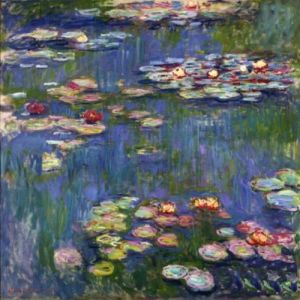
Like a Monet painting!

Indigo over tansy and madder:

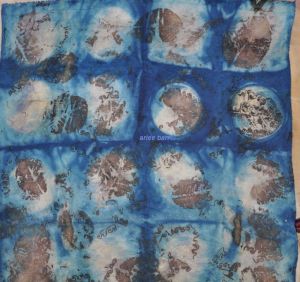
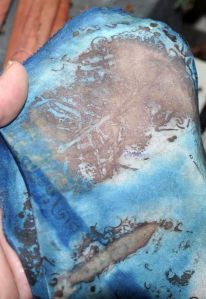
Indigo over ecoprint:

This one above i really love, as the indigo turned the ecoprint almost metallic!


~~~~~~~~~~~~~~~~~~~

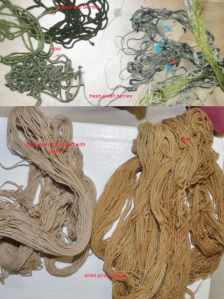
I’m still in need of green threads for projects, and remembered i still had some dried privet berries stored away from last February. CRAP, this points up why some materials should be used fresh, rather than dried or frozen……

And OMG did the dyepot STINK. A deep dark brown, it immediately got poured out in a spot where nobody goes in the back alley! I want to point out too, that privet (Ligustrum vulgare), while an attractive garden shrub, is also TOXIC. (It’s also invasive, so you might be doing the neighbourhood a favour by grabbing the berries so they don’t turn into baby privets…) One wears gloves, and one does not go all airyfairy breathy goddess and hang one’s head over the pot, inhaling deeply and exclaiming about Mother Nature’s wonderful gifts.

I’ll have to modify those to get greens, or dip in some indigo….

If you forage locally, know what you are gathering, and any potential toxicities.  Also, check to see if *your* country has a Biodiversity databank. Canada has an excellent one. They do also mention other areas, in the US. http://www.cbif.gc.ca/…/canadian-poisonous-plants…/…

~~~~~~~~~~~~~~~~~~~~~~~~~~~~

***Please bear with me as i update shop offerings. I know it may be annoying to continually see posts of “GO TO MY SHOP AND BUY BUY BUY”, but as an artist, and a small business owner, this is the way i help keep the groceries on the table, animal food in the pantry for the assorted beasties, and the occasional “luxury” like new socks and underwear 🙂 My hardworking Greyman  is very supportive of me, but i still have to pull my own weight, as an even partner in our marriage! I have only 3 avenues to promote my business: here, on my FB “biz” page, and on Instagram, so i have to take advantage of that. I don’t do craft fairs, though i may do the Contextural one this year, haven’t decided yet, so online is where my business is. Yes, it may seem pushy in a way to keep seeing these “ads”, but a Woman Has to Do What a Woman Has to Do, and the Gawdz know i ramble, rant and rite write about other stuff often enough in other posts, that i hope you will understand.


Posted in "OPINIONATION", Book reviews, natural dye research, Natural Dyes

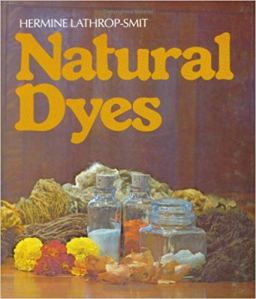
Book review: Natural Dyes (1978)

One doesn’t really need another dye book for the library, but i couldn’t resist, as this one was written by an Albertan, Hermine Lathrop-Smit, and is touted as “specific” to Canada.

Actually, it’s pretty much North American–most of the plants are available throughout a number of climes, and are not particularly geo-centric. It’s a funny little book, given when it was written, and some of the plant materials are specious in one way or another–beets don’t give red (i was QUITE shocked to see that entry, though she does mention that it’s not colourfast….), berries used are rarely light or washfast,  and no mention that lily of the valley and bloodroot are poisonous.

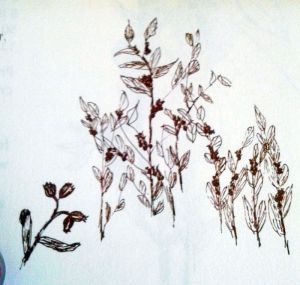
Illustrated with black and white drawings, i would recommend referencing an actual plant guide with colour photographs and full descriptors of leaf, stem, flower and seed, and growth habit (is it a bush, a vine, a flowering plant, field, mountain or water sited? These guides always mention toxicity as well, very important in the wild. Wouldn’t want a bear to eat Poisoned Forager (sub-species, varietal) 🙂 .  I use field guides for Alberta, and the Rocky Mountains, from Lone Pine Publishing which can be found in most garden centres, Walmart (!) and sometimes National Park gift shops. Some entries in these books will mention whether or not the plant has been used “historically” as a dye material, but don’t take that as a rule of thumb, as some of that is based only on hearsay and old wives tales! Lone Pine has a number of geo-specific books, so look for your area. You can also order online, if you can’t find them locally.

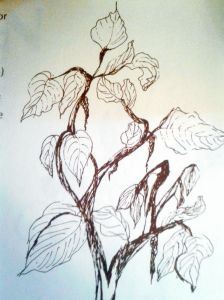
These drawings are rather vague, though she does give Latin names. I wouldn’t however have been able to determine WHAT these were from the drawing.

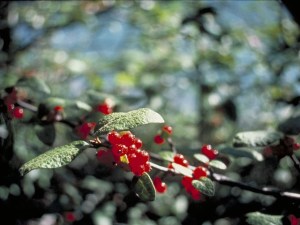
Buffalo berry/Shepherdia canadensis

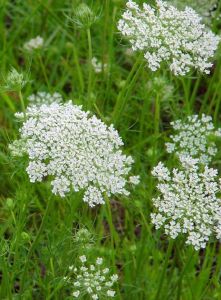
actual photo:

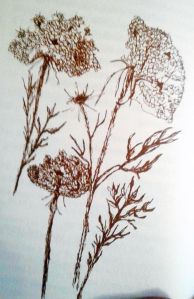
Queen Anne’s Lace:

This plant is particular is dangerous to identify from a drawing only, as there are many similar plants that are HIGHLY toxic. *I* know what QA is but that’s because i grew up with it. (Even it can bother some people, though NOT as much as the others!)

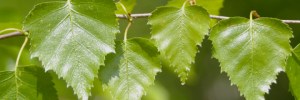
Birch. Seriously? While some know that birch is “peelable” bark wise (DON’T, unless it’s a dead tree or a broken branch!), most don’t know the difference between birch and aspen. And no one is really going to be able to positively identify this:

Heck, you might even think it’s alder. Below, the real thing:

You also need to watch out for common/colloquial/local names–one person’s bluebell is another’s Polemonium. Latin is the same EVERYWHERE.

I realize too, the cost of colour photographs was probably rather spendy as all was film in those days, but don’t depend on these for proper identification! The drawings especially of Queen Anne’s Lace can be very misleading, as there are a number of very similar plants, in the same family and in others, and some are extremely dangerous to human and animal. (I can’t reiterate that enough. Too many associate natural with “safe”– arsenic is natural too….

The use of alum is rather heavy-handed as well: 50gr to 200gr of wool, since most modern recipes recommend 12-20% WOF for “regular” alum (aluminum potassium sulfate ), and 5-8% WOF for aluminum acetate (THE recommended alum for cellulose fibres). Mention is also made of mordants we now try to avoid, like tin, chrome and copper sulphate. Note though, that some dyers with caution, expertise and experience still use these. Rarely do we use Glauber’s salt either–though maybe we should!

This book could also be confusing for the novice! There’s a chapter on mordanting that precedes the actual dye plants, but in many of the recipes, she adds the mordant to the dye bath, or no mordant at all, giving the impression that some don’t need it. Since none of the plants mentioned, except for walnut, are substantive (meaning needing no mordant), this gives the impression that these plants will give colour that stays, and that will be strong from the “get go”. Honestly, i mordant EVERYTHING, even for indigo, madder and walnut, not because they need it, but because having a stash of premordanted fabrics on hand means i can dye with anything, when i feel like it, and have it take the colour. Mordanting doesn’t hurt substantive dyes, so rather than take the chance of accidentally getting something unmordanted and going in a dye material that needs it, i figure it’s best to be prepared.  I do keep bags labelled with each type of mordant however, as mordants react differently to dye materials. Post mordanting *is* possible, but in my experience, the colour is not as strong. Overdyeing of substantive colours is also possible, but then they must be mordanted for the dye type being added over the substantive dye.

There’s a list of suppliers in the back too–when i searched, most of them are of course gone. Funny that one of them was Wide World of Herbs Ltd, in Montreal, the place where my 33 year old madder came from! Also included in a ONE page appendice of dyeing with lichens, very uninformative and vague.

So, in the end, this one stays in my library anyways, as a bit of history, a bit of useful information and a bit of a laugh.


PS DO NOT click on ANY of the “free PDF downloads” if you search for Ms Lathrop-Smit, as they are probably toxic malware sites!!!!!!!!!! I could find NO actual information about her, or any mention by anyone in article, blog, research site or history of the area.