Posted in a collusion of ideas, Deliberation--do something you don't do--or haven't in awhile, mordants and modifiers, Natural Dyes, osage, quebracho rojo

working up some courage

Natural dyes and silk velvet have an affinity for each other, like a love poem whispered into a breeze, like feather soft caresses, cool water on hot naked skin, sensual and earthy, sharing the privacy of deep emotion and quiet solitude.

I’ve always had a secret love affair with velvet, coveting the “lavender panne velvet pant” described in a 1972 Vogue magazine ( i was all of 15 years old and it was certainly not either in my world of farm town, or in my 60cents an hour babysitting budget…) , but never really comfortable wearing any as i got older, feeling slightly fraudulent and as if i was demanding attention i didn’t deserve. But oh the slither of it, the voluptuous animalistic tactility, in the hand, on the back of the neck, under the legs…………

Ahem. Mystery and imagination, in deed, and in thought! Sometimes it’s sexy, too often it’s overblown and tawdry—what’s the expression? “Mutton dressed as lamb”?

Down to earth now. It’s also A BITCH to sew, by hand or by machine, so i’ve stayed far away from it, though once in awhile i pull out a chunk of rayon velvet i dyed some 25 years ago, when all i knew about was Rit. Odd bits of it have shown up in wearable art i made in the 90’s, some Hoodoo work when we first moved to Calgary and i was so enamoured of the spectacular rock formations in and near Drumheller, a few Christmas bits, but nothing really serious.

BUT, these from the last 4 days:
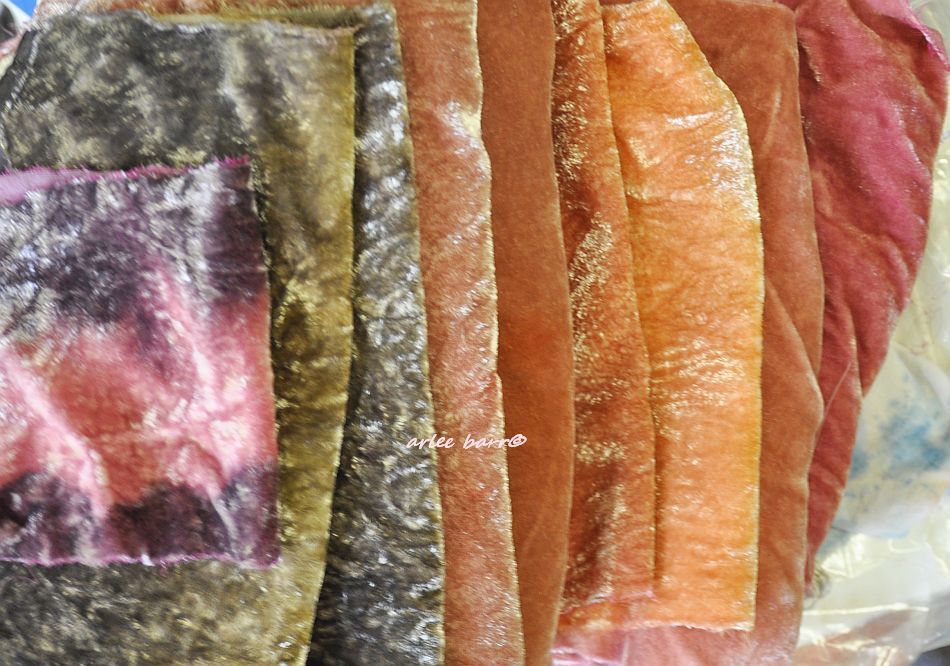
HOW could i not try again?

EDIT: Nov 21, i forgot to mention this is primarily using Quebracho Rojo extract (with the exception of the 2 greys/greygreens which are on osage), and are mordanted and modified with a few different processes. So all these colours from 2 dyes, and 5 mordants/modifiers!!!!!!!!

Now to dig through old sketchbooks.


Posted in mordants and modifiers, natural dye research, Natural Dyes, Naturally dyed threads, Probably talking to just myself, quebracho rojo

feeling in the pink….and purple

Now that i have a good stock of green threads from the osage and indigo work, it’s time to add some pinks and purples! Not talking about wishy washy, not talking about raspberries, beets, beans or any other silliness i see on too many blogs who haven’t the sense of a sack of potatoes 🙂

I did get a wonderful hot pink from madder by accidentally boiling over a pot of madder (considered a VERY VERY BAD BAD as madder shouldn’t go above a certain temp or you just get browns), some useful colour variations from cochineal in the pink to purple range, and a very deep purple with logwood. Cochineal however kind of puts me off now because i worry about Ph shifts–and some Ph shifts WASH OUT with an ordinary tap water rinse!!!!!!!!!!!– and i fret too about the lightfastness of logwood, because unless it’s got a lot of iron in the mix (which can damage fibres…), i’ve seen a noticeable change in the depth of colour within months of dyeing. (I do wonder too about the current craze for it in ecoprinting: are these people going to have a shock somewhere in the next few months/year with dramatic colour shifting or fade??) So………………. my next experiments/tests/results are from a type of tannin in the “catechic” range, more red-browns that the clear “gallic” or yellow “elegic” types. Tannins are an important part of premordanting fibres, especially cellulose which doesn’t work well with just alum, but very well with a tannin first, then the alum. Some tannins are also used as dyes by themselves, notably in the elegic and catechic types.

This tannin/dye IS more expensive, but i now am comfortable spending the money to get the best results. There’s no point in cheaping out with some things: it’s a waste of time, effort and resources, from water to electricity to containers and materials used, something i am very conscious off, having been raised quite frugally and with much common sense 🙂

When i threw the Quebracho Rojo in the pot, i first screamed (silently, as Greyman was napping). The colour was PHENOMENAL. However, that silent scream was from my excitable take it at face value 9 year old child self: my rational XX+ self reminded me that what you see in a dye pot is NOT necessarily what you get from a dye pot, as  i swear they deliberately skull xxxk with you. Ahem.

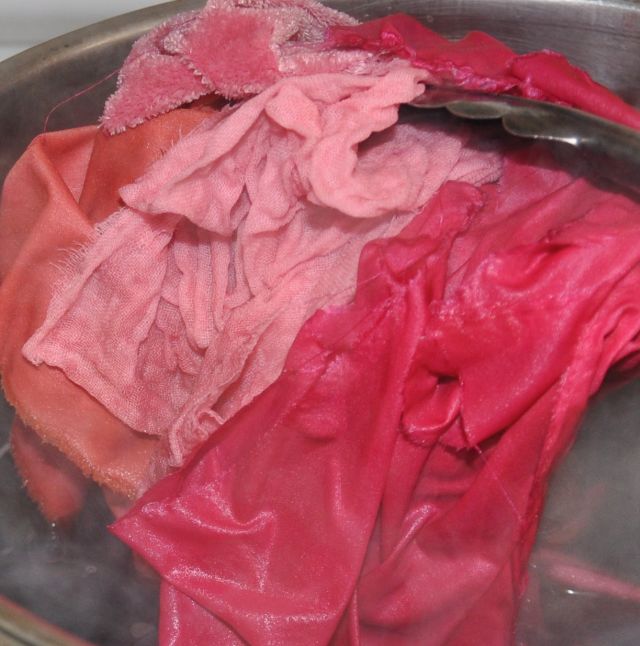
Looks fab, ay?

Wet, ooo ooo oooo:

Above, rinsed, barely any wash out!

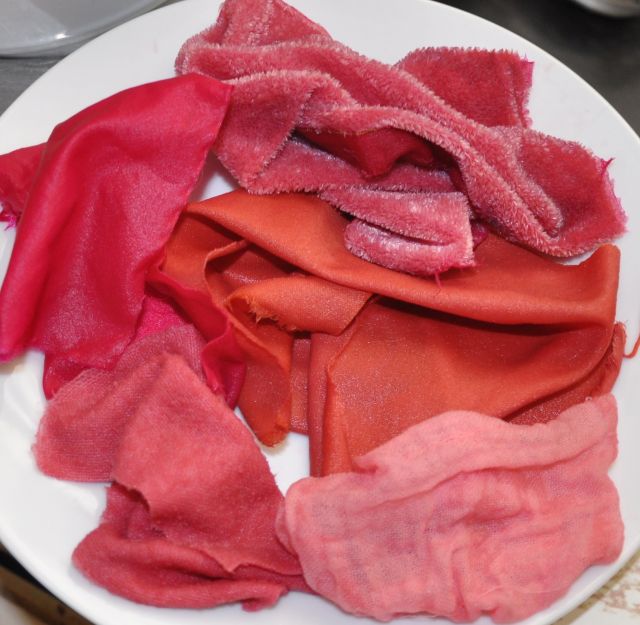
Dry, bearing in mind that colours can dry 20-70% lighter with ANY colourant, natural OR synthetic:

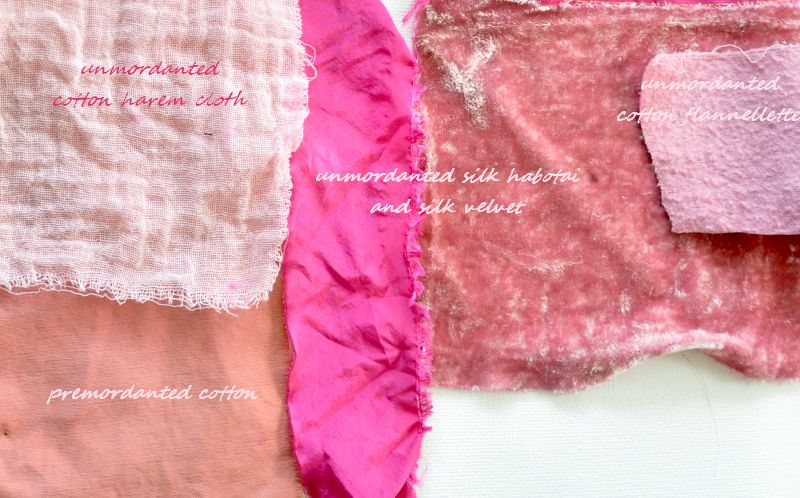
See what i mean by dye pot deception? Respectable colour, but not terribly excitingly scream worthy. Now mind you, the cottons that are paler pink were unmordanted, the darker cotton premordanted with tannin and alum. The silk habotai and silk velvet were also unmordanted, but because QR is a tannin as i mentioned, i figured “let’s try it as a tannin first”. Interesting too that most sources says it’s best on cellulose, “but performs well on silk and wool”, since obviously both silks did better……………………

The next phase of natural dye colour work is post mordant/post modify (though you can do these first, i don’t because i don’t want that active stew in the mix all in one pot.) Now this a is a nice range of colours!!!

Guess what though? I forgot to put any threads in, so now i have to go wind some skeins, scour ’em, then premordant some…………..

Olé!

PS you can still click on the photos for enlargement, but you can no longer comment on them–i had to shut that off due to the number of STOOPID ASSHAT SPAMMERS.