Posted in Ecoprints and Natural Dyes, embrilting, in progress

a little pain, a lot of gain

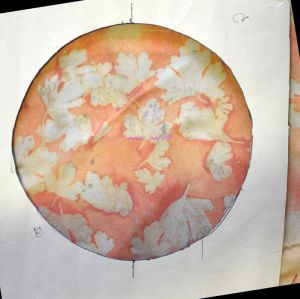
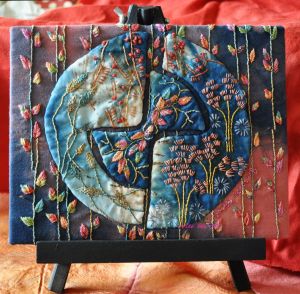
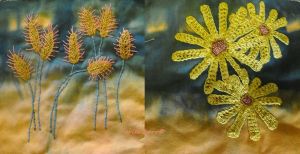
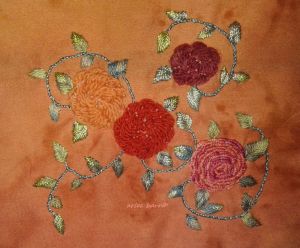
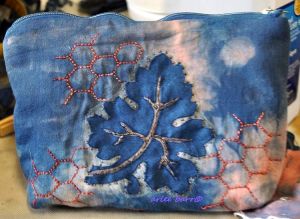
Yesterday was a “Dental Day”, and you know what that means! To keep my mind off what was going to happen, i worked on this little ecoprint. All natural dyes, all cotton, and a perfect antidote to pain and winter! Background surround is madder, madder with osage overdye, and ecoprint panel is madder and a tannin blanket, with leaves from my garden.

Shall have to photograph this in better daylight, as it’s even prettier than it is 🙂

Posted in Jam Day, oak

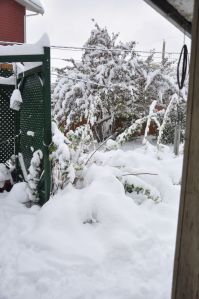
gah, winter is here

Really, we have had very little autumn this year!

Good thing i collected the last of the oak leaves yesterday! Hopefully we will have a melt because i still want leaves from the cottonwood/poplars.

Today, i’ve filled up the bird feeder, put out their suet blocks, and shaken some apples off the tree for the deer and squirrels. Part of the tracks in that snowy photo are the deer wandering through the patio area 🙂 I’ll shake the snow off those bowed down raspberries, because the deer love them too! I’ve already been out getting it off that crabapple so it doesn’t snap the power line to the garage. And the dog can’t make up her tiny little mind if she wants to come in, so she can have a towel rubdown, or go out so she can come in—- for a towel rubdown. 🙂 I think we’re up to a foot now…….

It’ll be a good day to stay in and play with post mordants and modifiers for the oak leaf experiments!


Posted in journal: lessons to learn, mordants and modifiers, natural dye research, oak

foraging, part 2

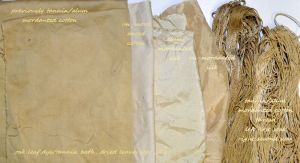
Mysterious chemistry 🙂 These are the oak leaf results.

Quite chocolate coloured on its own!!! I’m sure the first extraction, the first thread in the photo below, proves that more WOF is needed, as i’d love to get that ON fabric or threads! Even though the pot was positively solid with the leaves, i’ll do extraction by soaking/simmering for two days, then remove and add new/more leaves and repeat the process.

Oddly the UNmordanted silk took the colour better, whereas the uptake on previously mordanted cotton was expected.

I have also discovered that my thread skeins from this batch were looped too tightly to either be scoured properly, or mordanted thoroughly, hence the “variegation”–even though i loop quite loosely, it still had an effect. (lesson learned there: DON’T loop)

The colours are softly pretty but not terribly exciting, however they are good base colours for overdyeing, and are obviously *all* mordanted now, as that’s what oak does 🙂 I still have to do post mods to see what colour changes i can get (nothing earth shattering expected), but it *is* good to see what colours one can forage locally.

I’ll still collect more of the oak leaves as they are plentiful and falling anyways. And no one else uses them, just bags them up and sends them to the city compost facility! Also on the list is Cottonwood (a poplar species), very prevalent in my neighbourhood.

Posted in Natural Dyes, Naturally dyed threads, oak

foraging

As much as i love the “Grand Teint” dyes, the historically accurate tried and true, there *are* other geo-centric plants that are still considered dependable methods of colouring fibre. I’d like to use more of these in my studio, with the proper applications and methods used. (No beets, beans or berries in this Dye Dungeon!) You could call this one “loakal” 🙂

The only oak that is indigenous to, and survives the hard winters of Alberta, is the Bur Oak.  When i first started ecoprinting in 2010, i couldn’t find any, though i figured someone had ONE in their area somewhere, since i saw one of the leaves floating in the river 🙂  In the last three years however, they are aplenty, due to the city’s replanting along boulevards and green spaces. My neighbourhood now probably has at least 20 of them, but none on my street!

Recovering from ‘Snowtember’ 2014, Recovery and restoration of Calgary’s urban forest

In September 2014, a late-summer snow storm affected Calgary’s urban forest. Trees that had not yet lost their leaves were heavily weighed down by snow, causing trunks and branches to break. Of the 227 communities in Calgary, 148 with mature canopies were particularly impacted by the snow.

It is estimated that 50 per cent of the 500,000 public trees and 1.5 million private trees have been impacted. This means there are three times as many damaged trees on private property as there are on City land. Recovering from this storm will require us as a city and a community to look after our trees.

Out of this disaster, The City created the ReTree YYC program to work on the recovery and restoration of the urban forest. This recovery work started immediately after the storm and will continue over the next three years. This work will ensure we have a strong and resilient canopy for generations to come.

This is the snowstorm took half of our 90 year old apple tree!

I know that oaks give colours from beige, to yellows, to various greens and browns, depending on what part it is (leaf, bark or gall/”oak apple”), and what mordant or modifier is used, and that those can be base colours for overdyeing, or warm earthy shades to be used on their own. I don’t have a lot of these shades in my naturally dyed thread box bin yet, as i’ve been concentrating on brights, deep rich rainbows and exciting greens, all of which is kind of funny now, since when i started on the “natural” kick, i had to use commercially dyed browns….
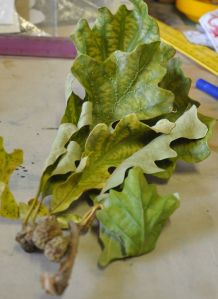
Oak is also rich in tannins, from any part of the tree. I collected a few galls as well this fall, something i’ve never seen before here. At the very least, my fabrics will be pre-mordanted correctly!

Yesterday, the DogFaced Girl helped me stuff a large grocery bag with fallen oak leaves (faded to brown, not like the green above from several weeks ago). That girl is such a help on these walks 🙂 I didn’t weigh the amount, just stuffed a 16L pot, with about 12 litres of hard tap water, simmered them for 2 hours, threw in a skein of thread and left it overnight to stew and cool. (I just realized too the thread had already been premordanted, so will have to try one that hasn’t been…)

Because the pot is so full of leaves, the thread was somewhat constricted, so the dye job is a bit patchy in uptake, which is okay because i love variegated threads 🙂 This is still wet in the photo, but isn’t it a pretty gold?
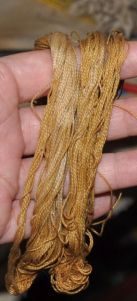
Yeah, yeah, i know, the number of plants that give this range of colours is humungous. The point is though, that it IS an actual dye (and tannin), and as i noted, a good base. And i did it.

I threw the skein back in the pot, wanting to see if i could get an even deeper shade with longer soaking, and will add more premordanted and unmordanted threads, and a couple of hunks of fabric as well. Tests at the end of the week will be overdyes, post mordanting and post modifying.

And Nessie and will be going on another long walk with more bags, as the leaves can be dried and stored for later use, during out long cold hard Calgary winter.


Posted in a collusion of ideas, Moons, Natural Dyes

adding to the series

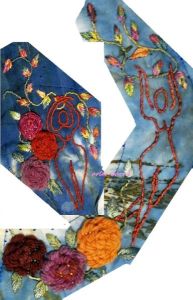
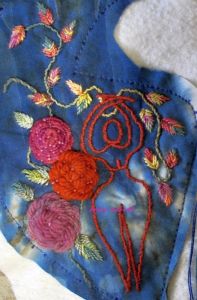
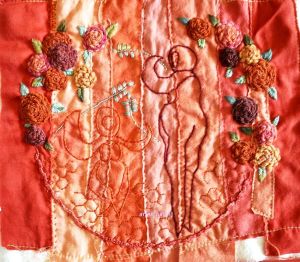
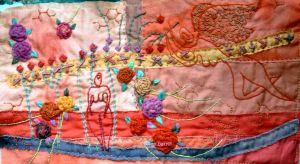
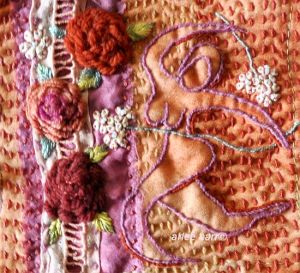
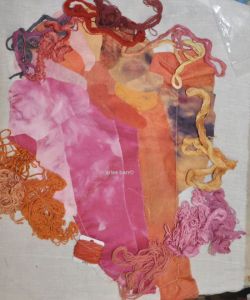
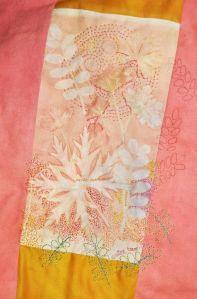
There’s a very satisfying feeling to using your own dyed fabrics, and especially your own dyed threads 🙂 All natural again, i’m continuing with the moon series.

These little goddess figures make me so happy! I’ve used them before, but i never get tired of them.

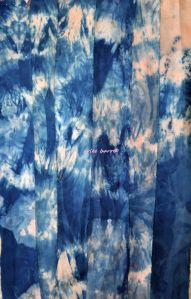
All of the above are the natural dyes, and from the Summer of Madder Study project–still working on that though summer is long gone now!

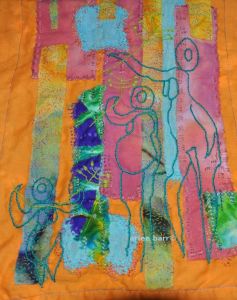
Below, a section from a piece i did during a Jane Dunnewold creativity course in 2016.

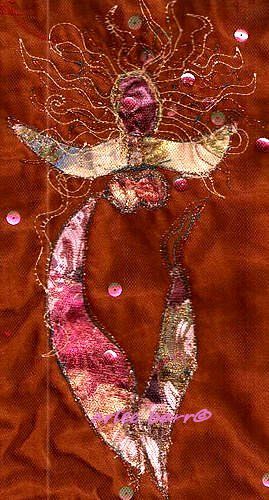
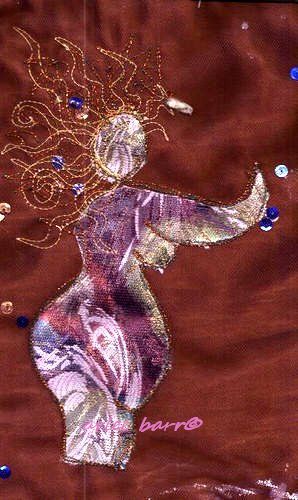
EDIT: Just found these 2 “oldies” as well, from my mixed media throweverythingandseewhatsticks days (2005)

goddess 2005

goddess 2005b

Posted in Deliberation--do something you don't do--or haven't in awhile, Natural Dyes, Naturally dyed threads, Samara

trotting her out again

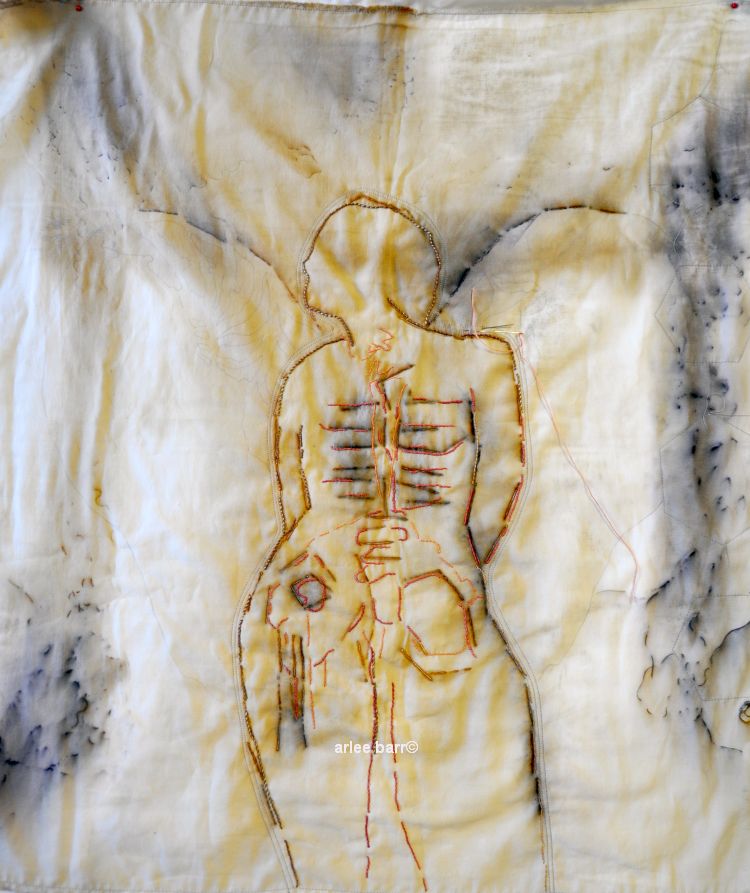
Samara has been patiently waiting “in the wings” for 2+ years, created during my 2016 residency at ACAD. I’ve gone through so many revisioned ideas, that my head whirled, and i’d get lost, and hang her back up on the studio wall to stare at , then to ignore…….

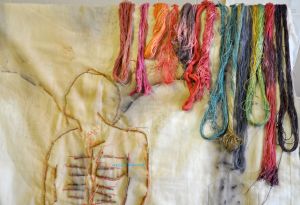
Above, as she is to date, a bit of stitching with walnut and madder dyed threads.

Below, several of the ideas i had for her wings.

Nope. Sort of like both feather treatments and the scrappy look, but not enough to get on with them.

Now what if i

a. cut her wings out also, separate from body slightly, with colour underlay in gaps–but how do i treat the wings themselves?

b. covered the background with scraps, not quite boro, but the idea of rough edges and colour layering—not solid or what is the point *of* that background colouring/patterning?

c. vines, seeds, grasses, grains and leaves everywhere, solid? autumnal

d. wing treatment? the layered feathers?

e. introduce more colours–approach? “blocking”? blending?

f. treated the hexes dimensionally, motif wise and presentation/placement ?


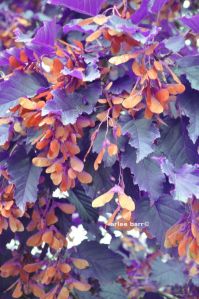
Because rather than do all neutrals like i used to/usually do on these deliberately “designed” wholecloth rust and dye pieces, i want more colour now.  It’s part of why too, i’ve been dyeing so many threads with natural dyes. This was part of my original inspiration for the feel of autumn:

I’ve been working on small moons again, behind the scenes,  but i need to get back to the Big Serious Work as well. I have to stop second guessing myself: the summer has been one of low self esteem, exhaustion, depression and doubt, and it’s hard to get out of that rut. Dyeing suited the mood swings, creating colour where there was none, but a full bin of un-used beautiful threads would be a waste as well.

How does one boot oneself in the arse without hurting one’s back?