Posted in in progress, Natural Dyes, Samara, Suzanis

progress on second Suzani, and more importantly, Samara too!

I’m trying to spend less time on line, and more in the studio….ha.

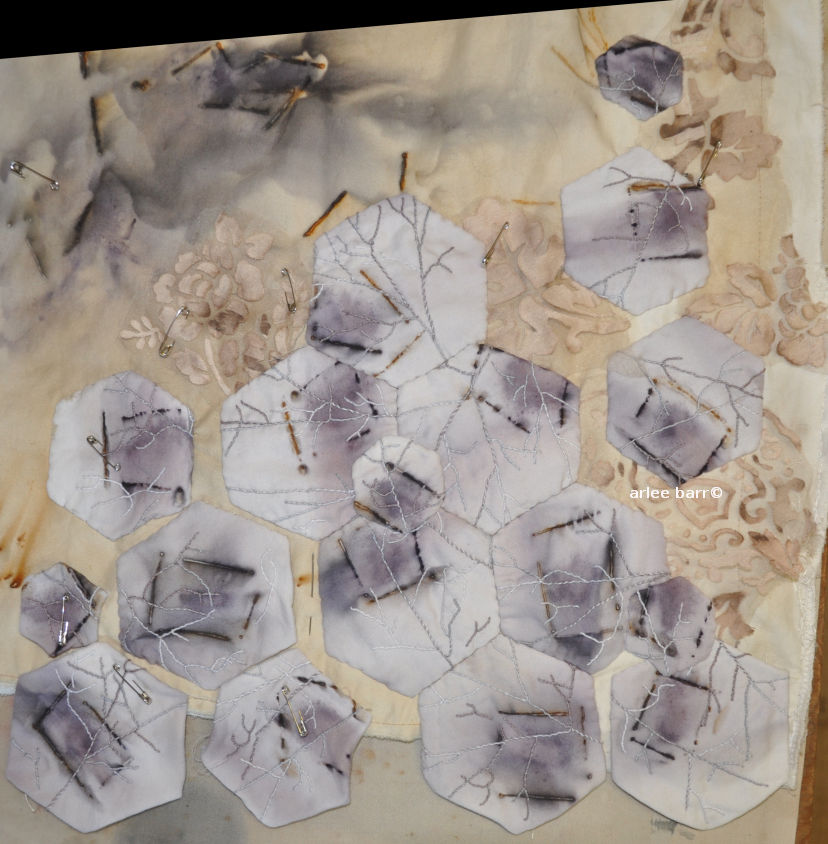
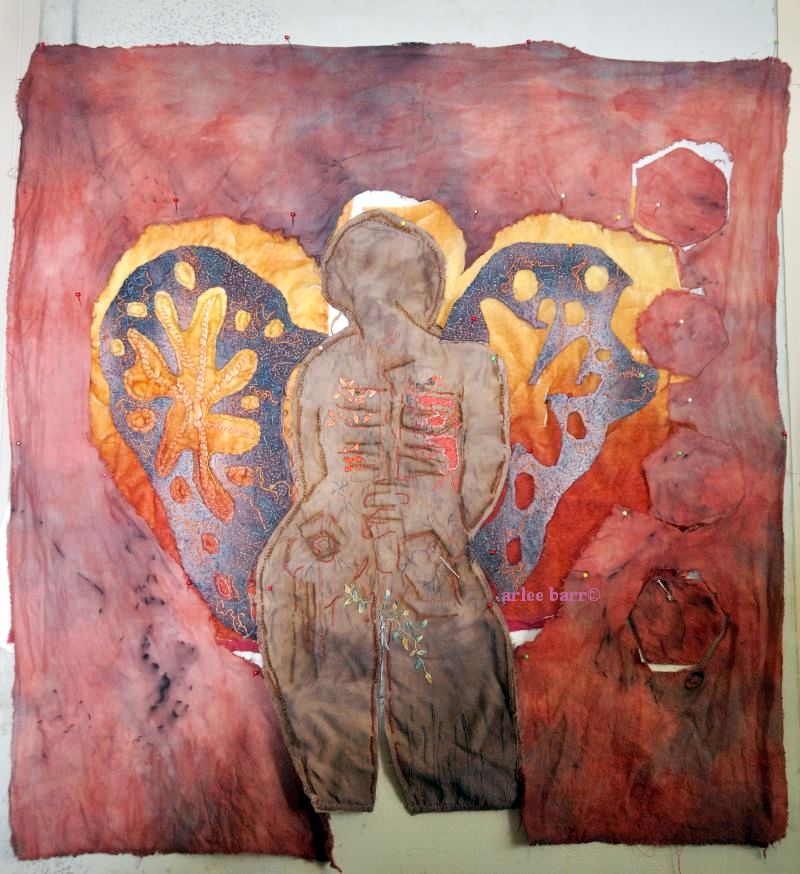
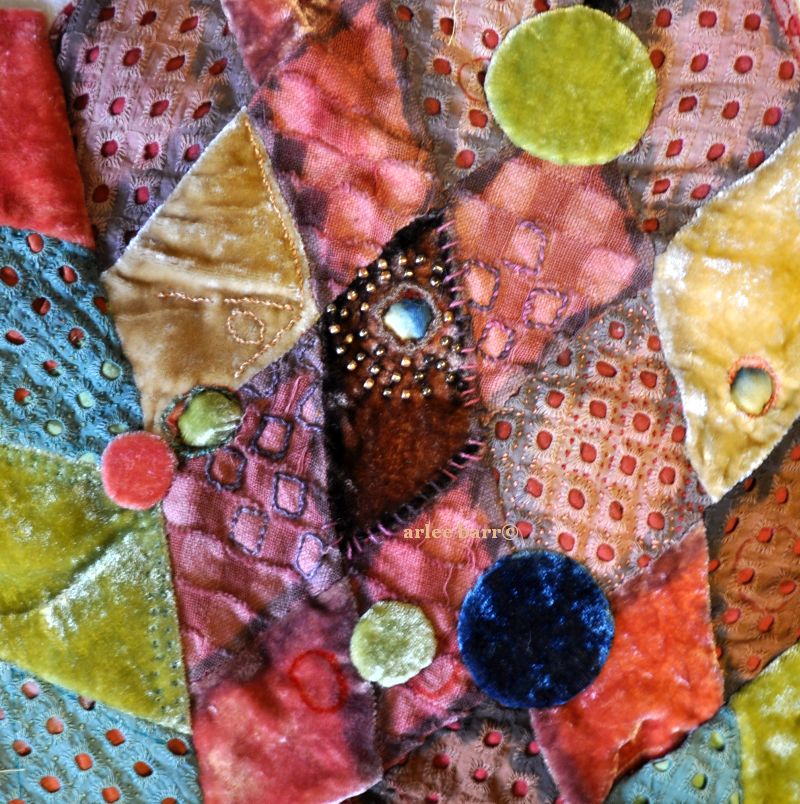
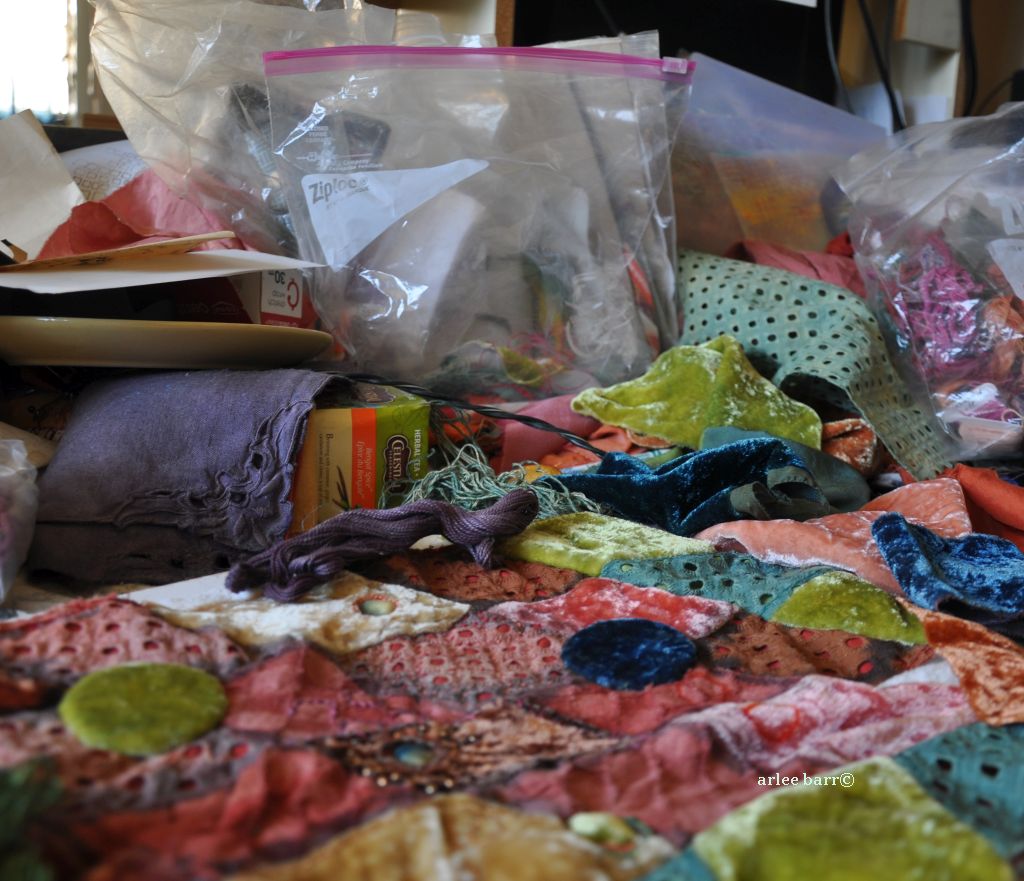
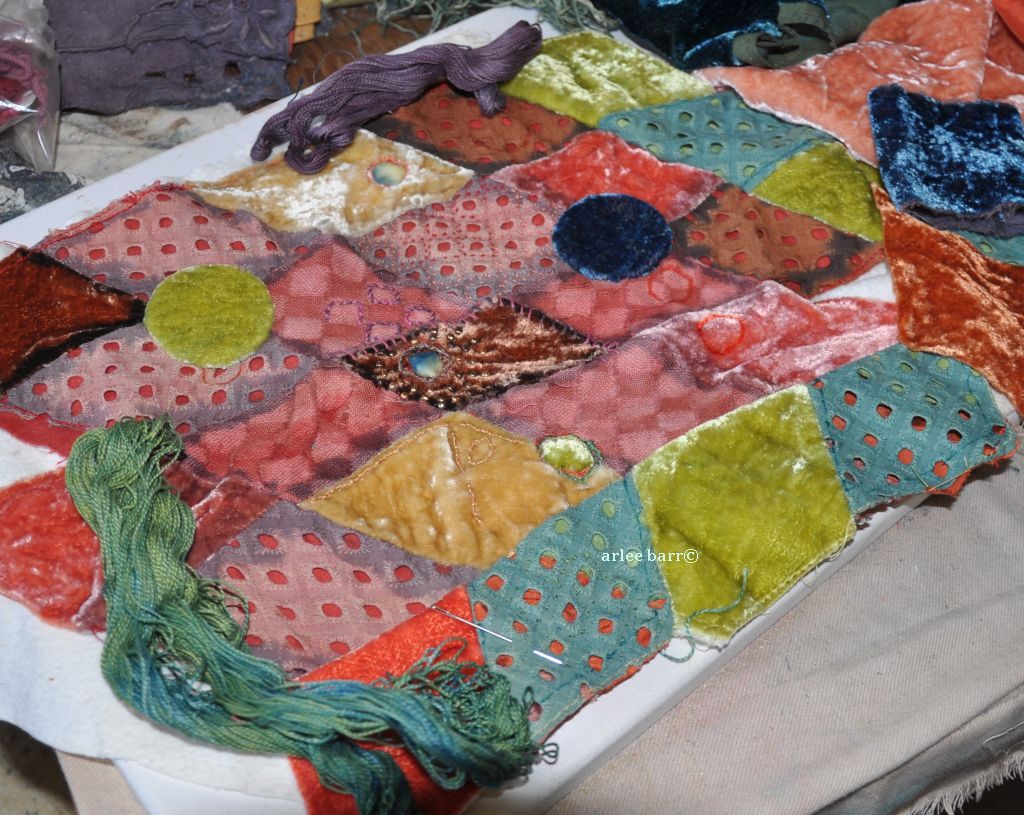
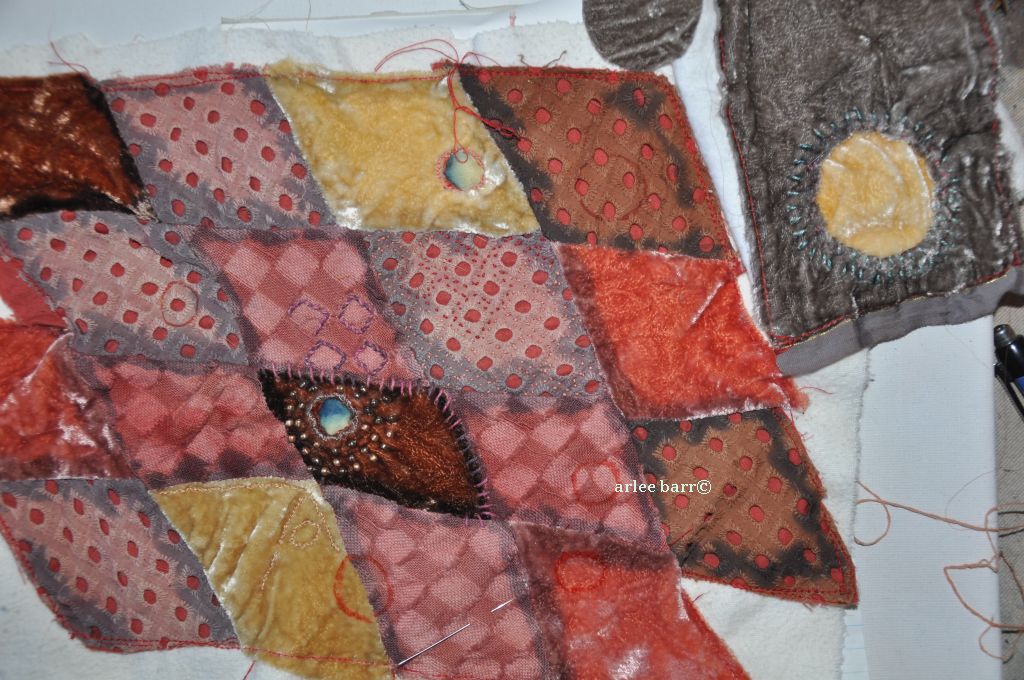
Samara’s body is almost done. Her wings are pretty much done, if not in execution, but in idea. (You know that one: in your mind it’s done because you know what you are going to do to finish that section, and can “see” it done πŸ™‚ ). I decided to change up the hexes along the right side though: the recent naturally dyed velvets are perfect to tie in with the areas around the wings. I’ll still use the cotton “solids” that were originally slated for there, and treat the stitching the same way.

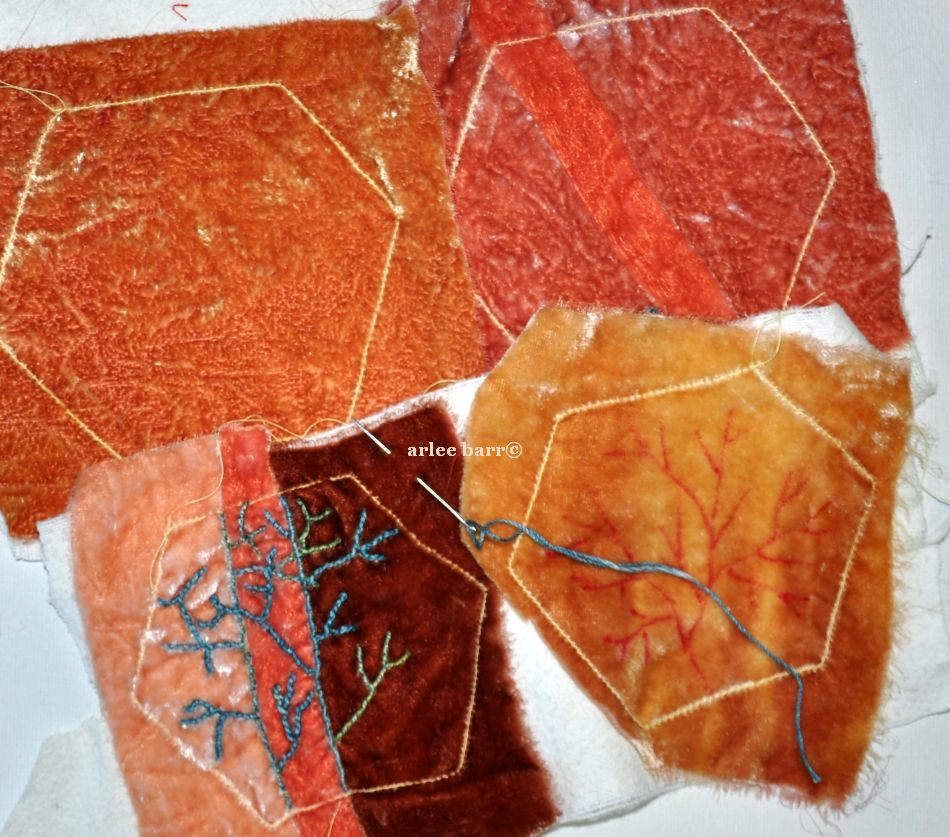
I added another greenblue thread as well:

Same type of stitch in think as “Original Truths” was done with; i do like that organic root/branch/path idea:

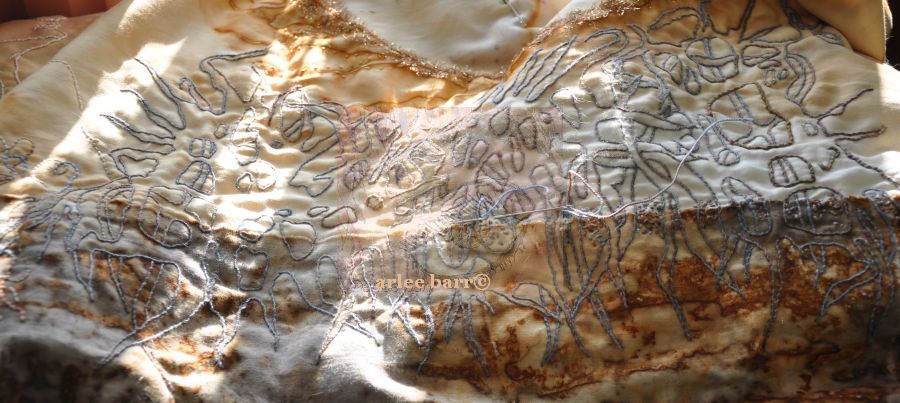
I was looking at older work photo files again, puzzling over how to treat that big area of red background, and found progress shots of “Strange Soul Take Flight” (2013), a continuation and expansion of the root idea:

I need more threads in the blue/green range as that is what’s going to tie it all together. I may combine some cutch or quebracho rojo with the tansy and indigo: i don’t want this idea to fight with the hexes.


Now known as “Harlequin”, i could also jog the suzani part into ‘soupzani”……… I threw a bit too much at it, but i’m just going to go with it. It’s joyful, it’s fun to work on, and what the hell: whose rules anyways?


I know already that the edges will be bound with indigo, whether in silk velvet or cotton, solid or eyelet (?)

~~~~~~~~~~~~~~~~~~

And the dress fabric from the previous post is now being mordanted πŸ™‚

Posted in "OPINIONATION", Book reviews, natural dye research, Natural Dyes

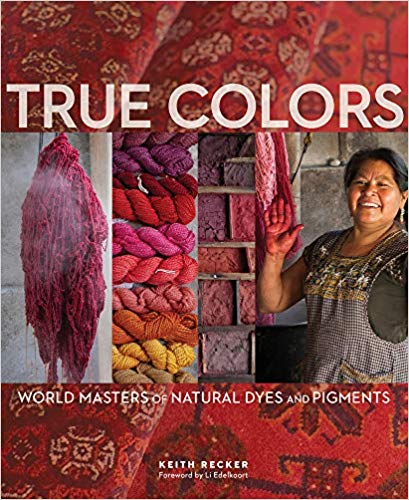
“True Colors” book review (or how to make yourself even *more* unpopular)

Firstly, i’m ambivalent, PERIOD, about posting this review. I realize it may have been a deeply personal choice of the editor/writer to make these particular inclusions in the book. I’m also rather curious how some have been given the title of “World Master” as well. But honestly? I wouldn’t recommend buying unless you’re one of those people who has to have *EVERY* book on a subject: borrow from the library when it gets there.Β  (Petition your library: they are always open to reasonable requests for aquisitions, and it’s still a sale for the writer/publisher.) It’s not that it’s expensive (it isn’t by a long shot) but you’d be better off with other more historically “slanted” books, like Dominique Cardon’s epistle, any of Yoshiko Wada’s beautiful offerings, Jenny Balfour-Paul’s indigo histories, and many museum guides online and sometimes available as catalogues.

So.


This is the first natural dye book i’ve ever been ambivalent about. On one hand, it’s exciting visually, a cornucopia of natural colour use around the world, illustrated gorgeously with close-ups and atmospheric scenes. Spotlights are on cultural meaning and history, empowerment of indigenous people, and the uses of ethno/geo-centric dye materials, in traditional and in cutting edge directions. The many facets of indigo are intriguing, and in some cases jaw dropping in the dedication to preservation of a skill, and in the use of aeons old techniques and materials for contemporary art applications in other media. The indigo sections in particular opened my heart to appreciate *all* the permutations of blue possible and to embrace the vagaries of the vat, finding beauty in the palest to darkest, no β€œwrong” blue as a result. The book should have been edited then and there, to be finished.

The reverse side of the coin however is the inclusion of erroneously labelled β€œsustainable” branded β€œdyers” who promote the use of food waste, fugitive dyes and the instant gratification element of DIY, with no actual historical data. This isn’t a recipe book by a long shot, but i would have expected a disclaimer by some, (even one!) of these currently Popular Girls, about dyes that last, are done correctly with proper mordanting, with light and wash fast tests, instead of β€œseasonal colour” that essentially wastes more resources by the very fact that they have to be redyed over and over to have colour. I feel that these chapters are puff pieces only, designed to fill the book, with no actual value added, but since there are only a couple of these artistes included, there is a small blessing in that.

As i said, this isn’t a recipe book by a long shot, and was never intended to be, but in giving the title β€œWorld Masters” to some of the included artists, it cheapens the whole field, promotes bad practice, and encourages questionable business models. It’s unfortunate that the classic dyers, innovative artists and contemporary uses will be glossed over by many in favour of the easy to do fugitive. A coffee table book, and it may pique some interest in those who intend to get serious, but in the end, not a reference book, not destined to become a classic, and not very useful for the most part, except perhaps as a β€œDigest”.


Unfortunately, or funnily, or strangely even, i cannot post this review on Amazon, because the book hasn’t been “released” yet. Really? I got my copy 2 days ago!

You’ll note too that i actually was rather mild in my condemnation for fugitive dyes, and mentioned no names πŸ™‚ These ARE *MY* personal opinions, and whilst many think i’m a Know It All, i have never steered anyone wrong, deliberately or otherwise, with information i have shared. “The facts, Ma’am, just the facts.”


Posted in a collusion of ideas, embrilting, in progress, Natural Dyes, Suzanis

a gathering of intention

I know some of you would rather see me posting photos of my embroidery, but please bear with me: summer is the best time for me to do my naturally dyed fabrics, for my own use and for my shop. The shop supports my handwork, so it does all eventually balance out πŸ˜† I have a few scrap inspiration packs available now, and you’ll find them decent sizes to work with at a reasonable price- — *and* i tell you what #botanicaldye #plantdyes i use, unlike some listings elsewhere. This ensures that your purchase is something that is not going to fade, because i use only proven #naturaldyes , and that it is dyed correctly, according to historical use. I unfortunately see on Etsy especially, teeny weeny scraps being sold for outrageous prices with no indication of *what* “plant/botanical/vegetable dye is being used, so they don’t even know what they are buying! Some of it literally looks like old garbage scrounged stained bits you’d find by the train tracks. Not in my shop!

Anyhoo, i am starting to get back to some embroidery, in fact champing at the bit to. There are many too many UFO’s lying around here, all started with excitement, small things that should have/could have been finished by now, if i set myself a schedule. Time management the last couple of years (honestly) has not been a strong skill, or one much used!

I do however like to think of my excursions for stash building and the shop, as “reading breaks”, a time when colour can become important as the base for new work, or to jazz a jaded effort that went PLUNK.

Samara of course is important, but i also want to get back to more of the “suzani” style work. I really enjoyed this and the subsequent paring down of design.

This was the latest “start” of a suzani, untouched since the last week of June:


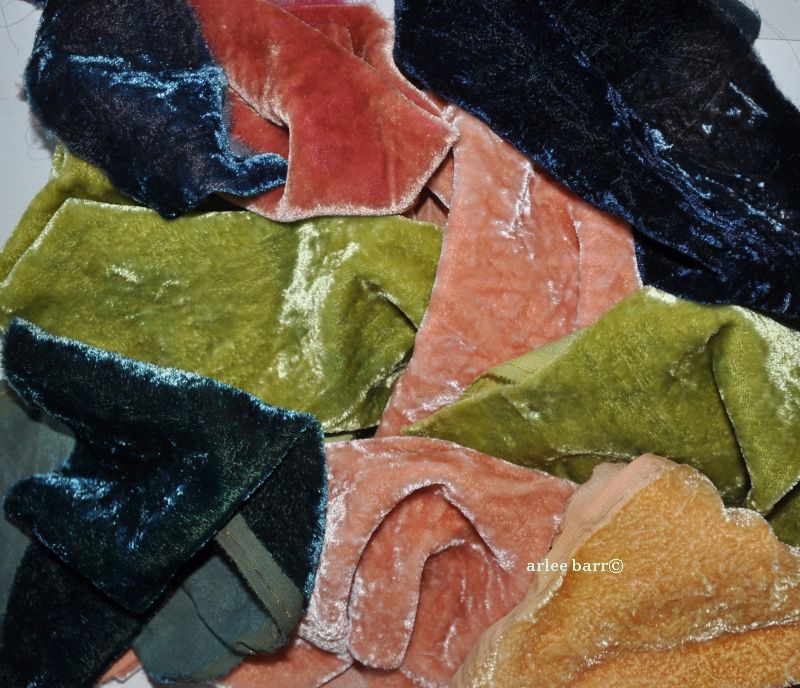
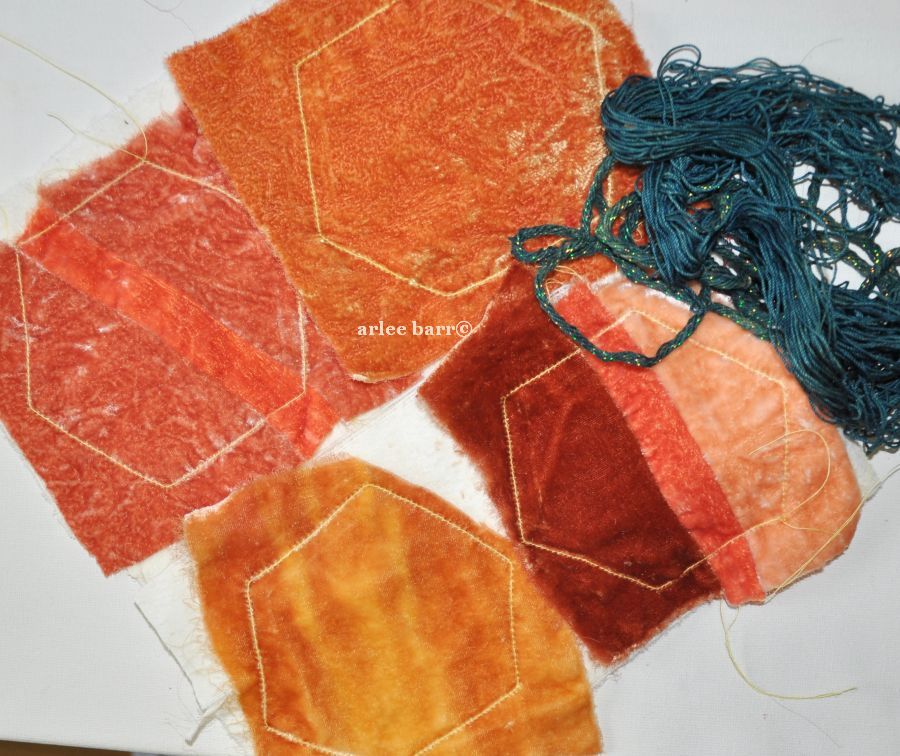
Not terribly exciting. But then i looked at the pieces of silk velvet recently dyed, and i start to drool:

And cottons too:

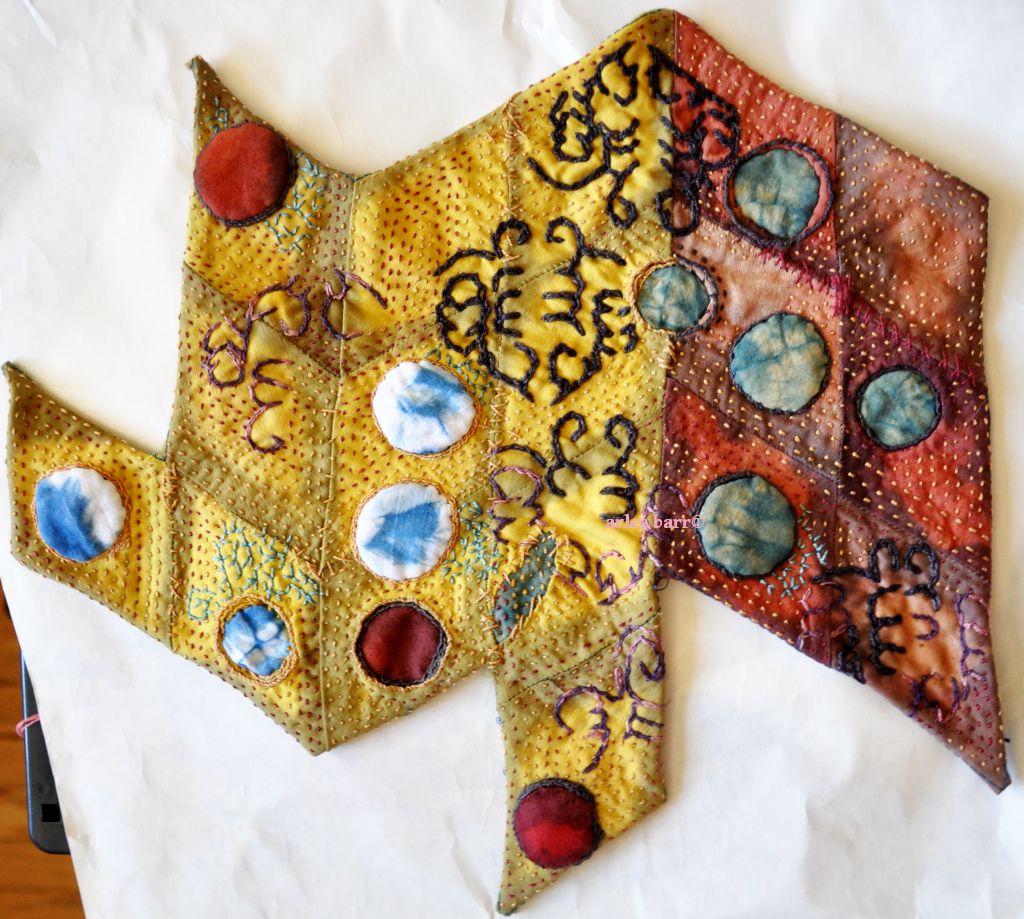
I *may* have to dis-assemble the start, and re-piece! I want to have the irregular shape the first one had (not exactly the same of course, but the general idea), a happy accident in sewing diamonds together, and to go larger as well.

The first one:

Now i’m off to do the “re-design” and piecing!

PS There are a couple of velvet scrap packs in the shop at the moment πŸ™‚

Posted in Indigo Dreams, osage, quebracho rojo, tansy

down in my dreams

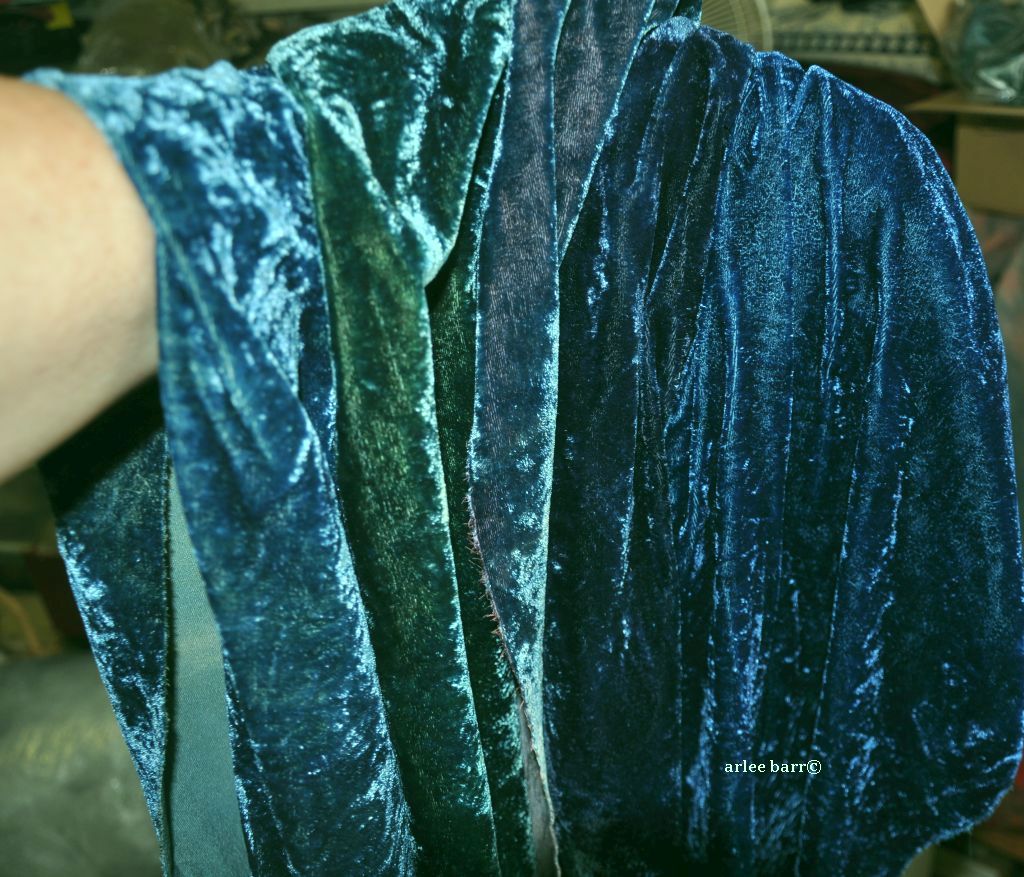
Hues of blues and schemes of greens, silk velvet naturally dyed with osage, quebracho rojo or tansy and dipped in the magic of indigo. Leaves and deep ponds, skies and tears, oceans and mountain horizons.

“Deep greens and blues are the colors I choose
Won’t you let me go down in my dreams…”

Listing live tomorrow. Β  Listed now. Β Β Β Β Β  SOLD OUT


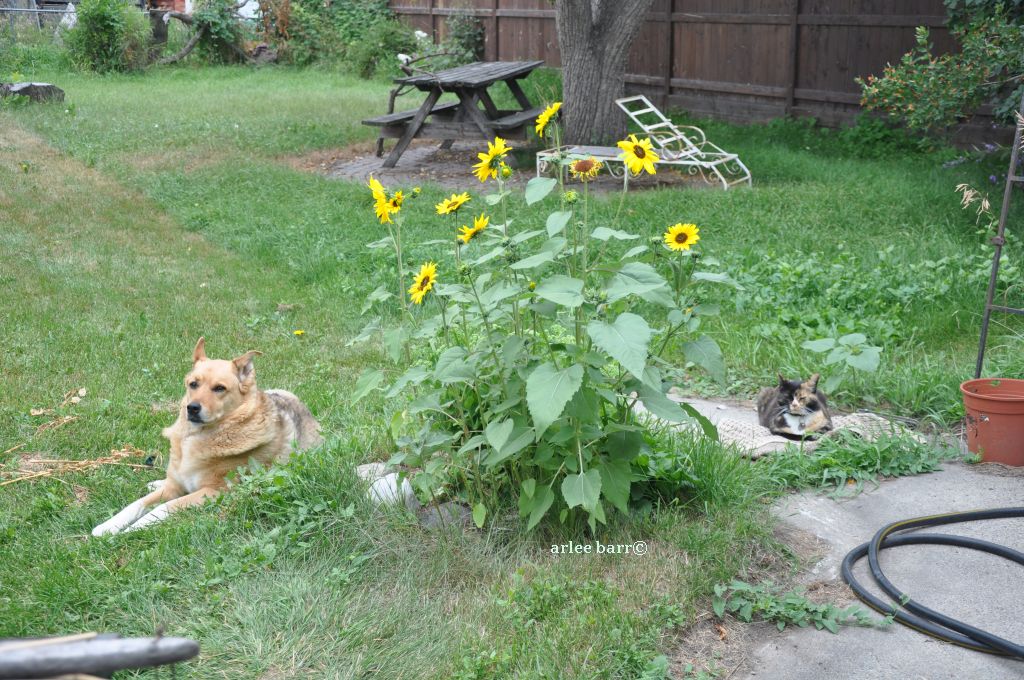
The Indigo Day Dye Inspectors are bored obviously.

Biscuits were handed out.

Posted in cutch, Days of Honey, indigo, madder, mordants and modifiers, Natural Dyes, osage, quebracho rojo, tansy

in soft fields

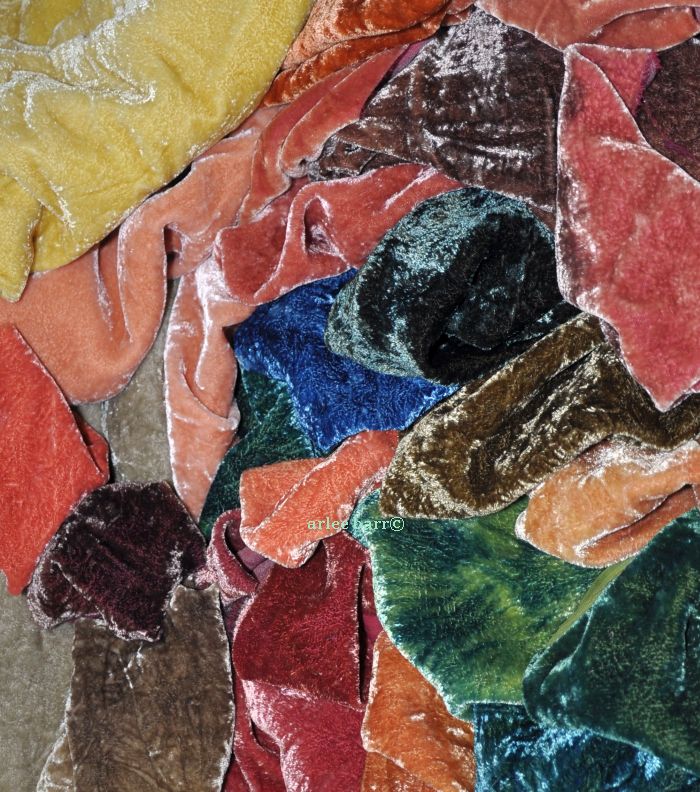
Coming, coming, coming, soon i promise! Still fondling and sorting these silk velvets, trying to decide what colours should go together! Tell anyone who says “natural dyes are boring old browny beige blahs” that they are SO wrong I hope to get packs in the shop by Friday evening, and yes, these will be included in the current sale. There may even be some scrap packs of these! SEVEN PACKS NOW LISTEDΒ Β  SOLD OUT

Posted in Indigo Dreams, Natural Dyes, Probably talking to just myself, tansy

the greens of summer

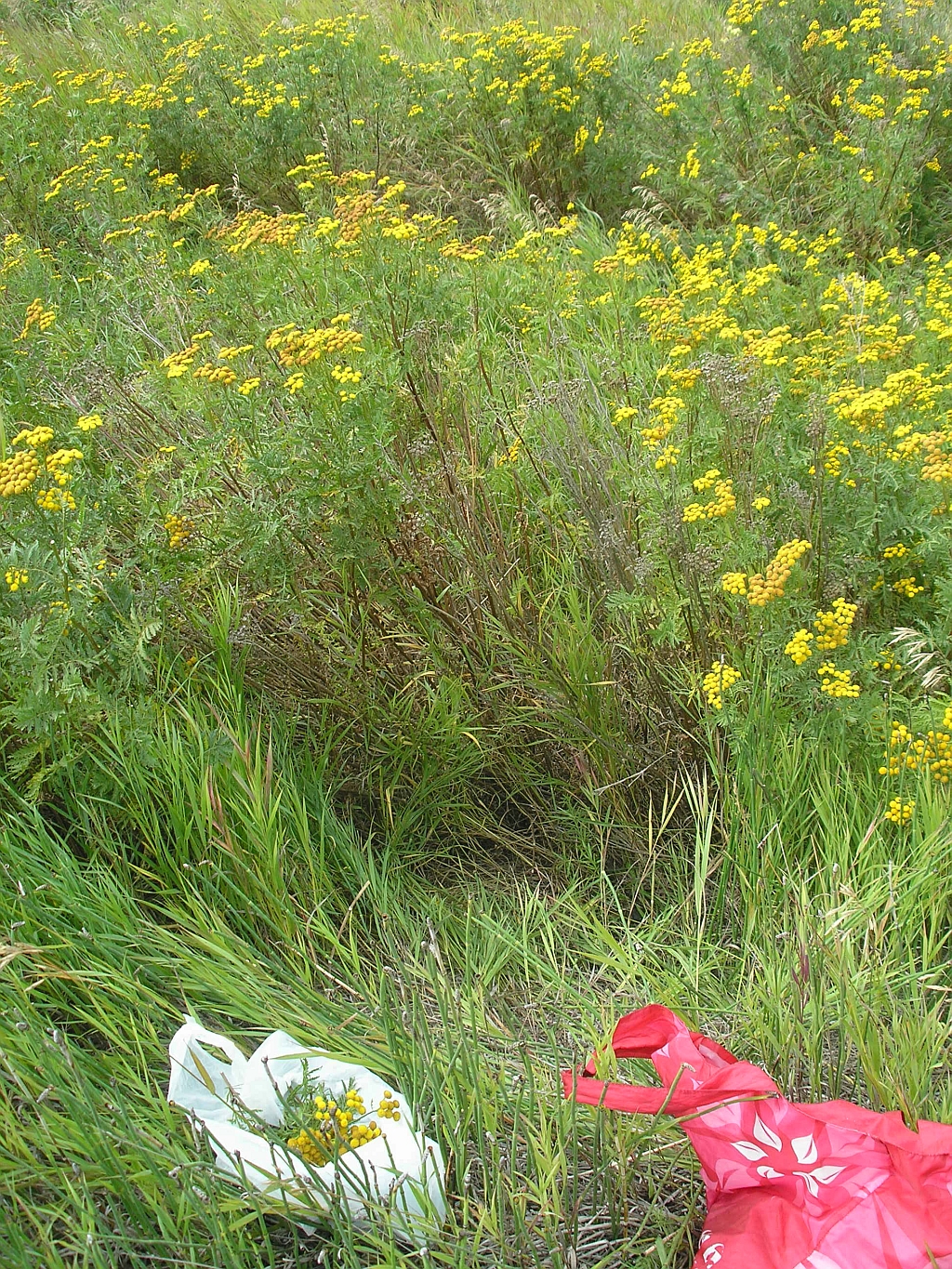
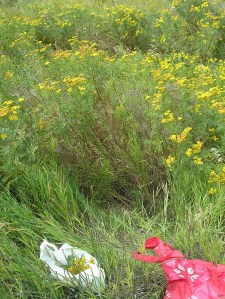
Above, that’s actually a photo from 2010. “There was a gigormous patch of it by the tracks so i headed there eagerly. Just as i got to the edge of the embankment, i heard a train and caught out of the corner of my eye one of the machines they use to keep track (narf) of the rails and trespassers, coming around the corner. Guess who was trespassing actually? Guess who fortunately (?) was so startled that she fell down the embankment into a tansy forest????? They never saw me, even backing up and looking while i flattened myself out on the ground down the edge. I felt guilty and silly at the same time, elated too πŸ™‚ I snuck the camera out of my bag in case one tromped over and asked what the hell this middle aged frazzle haired freakwoman was doing lying on her face on CPR property in the weeds. Umm, taking pictures because i’m a botany specialist? HA! Got a BIG bag of tansy after they toodled back the way they came.”

As much as i love the results i’ve got with “traditional” natural dyes (ie the ones i have to buy, like madder–still waiting till the fall to harvest mine, indigo, cutch, osage, logwood etc), i love a good walk, with the DogFaced Girl of course :), to forage what i know are proven dye plants in my area.

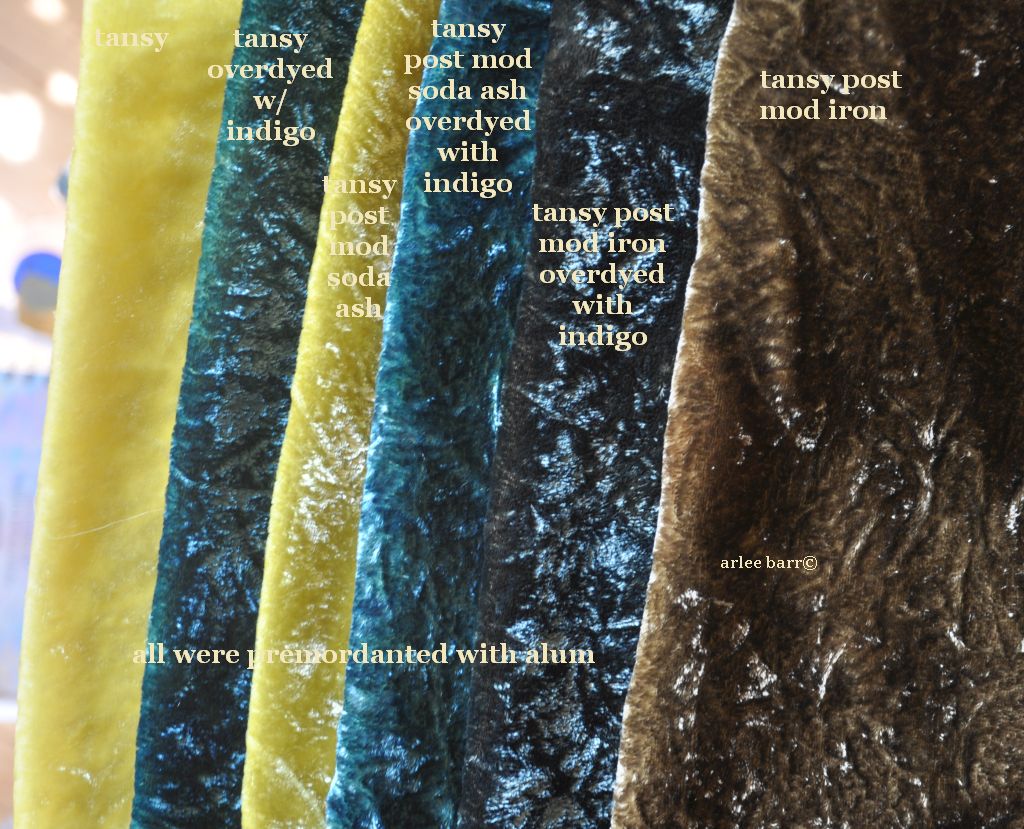
My last big excursion with local plants for natural dye was a couple of years ago, and the results weren’t great. I was never sure if it was because the tansy was picked from a site that had previously been a (probably) highly contaminated ground for a gas station, or if it was just a bad year for colour. This year though there’s ACRES of the darn stuff, a highly invasive plant in the neighbourhood. I decided to try again, and my first excursion yielded the picking of 3.2 kilos (7.05lbs), barely a drop in the bucket even in my immediate area! I’ll be picking more, as there’s probably 1000 times that, no exaggeration, within the 3 block radius i pick in! It can be dried, but sometimes the shades are browner or weaker. That being said, it’s a good base to overdye with other colours: indigo for the most spectacular greens, madders for warmer yellow tones, or oranges and corals, and who knows what with quebracho rojo or cutch? I’ll be testing those as well.

When the flowers are gone, picked or naturally drying/dying on the plant, i can collect the leaves for greener yellows too.

I seriously upped the WOF this year as well, using twice the amount of plant matter per weight of cloth. YUM. This is YELLOW, a cool one, unlike the warmth of osage, but i do love the various shades with different yellow plants. When foraging locally too, the likelihood is that most plants are going to give yellows or greens, but post mods and other dyes can really extend the colour range. I can’t gather enough Solidago (Goldenrod), as the varieties that grow here are really mingy stunted little varieties. Ah, i miss the Ontario ones for colour, and beauty! (Not that i knew that when i lived there, oh so many many years ago…..)

So,
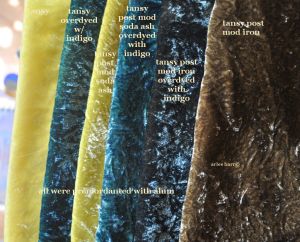
Amazing what one plant, some pre and post mods, and 1 overdye colour can do. Note: these are all silk velvet, with tests to come on cotton and silk habotai.
 

Posted in Home Cookin' the Cloth, journal: lessons to learn, mordants and modifiers

beautiful mistakes

When chemistry has its own way.

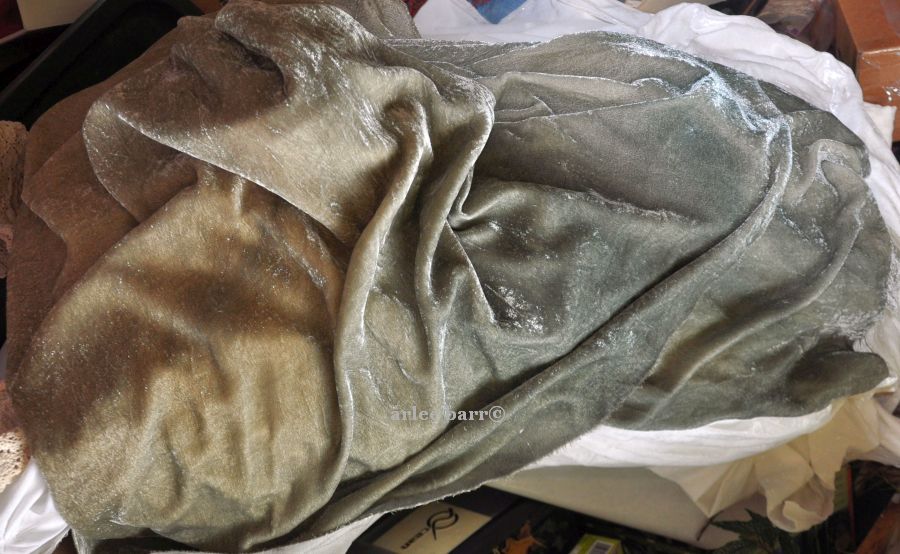
I bet i couldn’t replicate this if i tried…..I had used this tannin bath already twice, and it was filtered water, but the tannin had started to oxidize, and it also showed me that either my filtered water system leaves some iron in, or that the original scouring had left a residual, BUT it’s the most gorgeous silver and fawn i’ve ever seen. The right side is actually the bottom edges, and the left is the middle where it was folded over a rod to hang to dry. The iron migrated then to the bottoms so it was still pretty “loose”.

I’m hoping that after a good rinse, it’s much the same. (Silk velvet)

Posted in cochineal, cutch, Madder, mordants and modifiers, Natural Dyes, osage, quebracho rojo

naturally dyed silk velvet

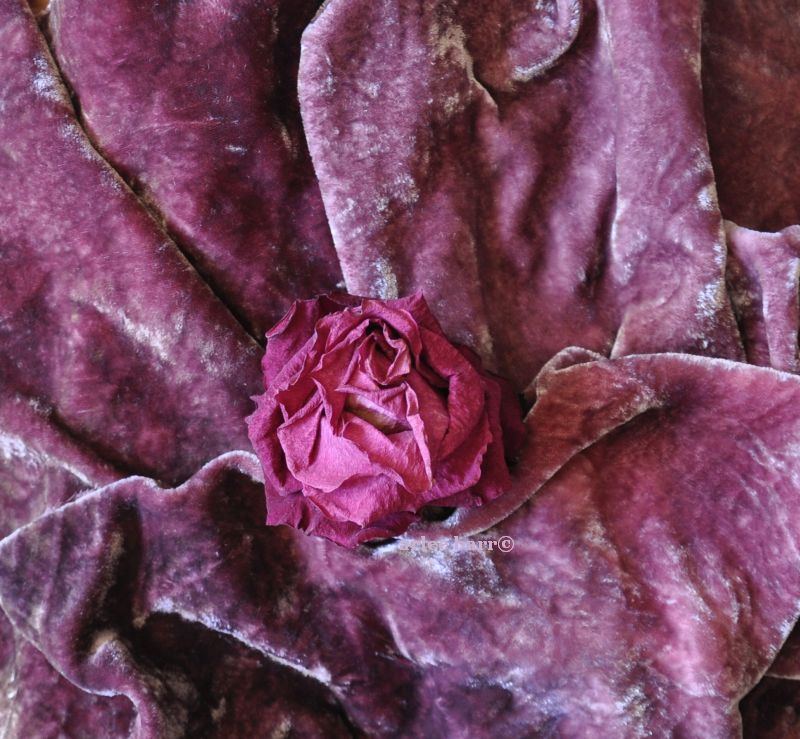
I’ve had a love affair with velvet since i was 12 and found a Vogue magazine that advised “A pant of lavender panne velvet is the essential in a bohemian styled wardrobe.” I’m not sure *how* i thought my 60cent an hour babysitting jobs were going to finance the purchase of an $800 garment, but that was obviously beside the point (I’ve never forgotten that quote either…) Natural dyes coupled with silk velvet have me quite giddy at the moment. 😍

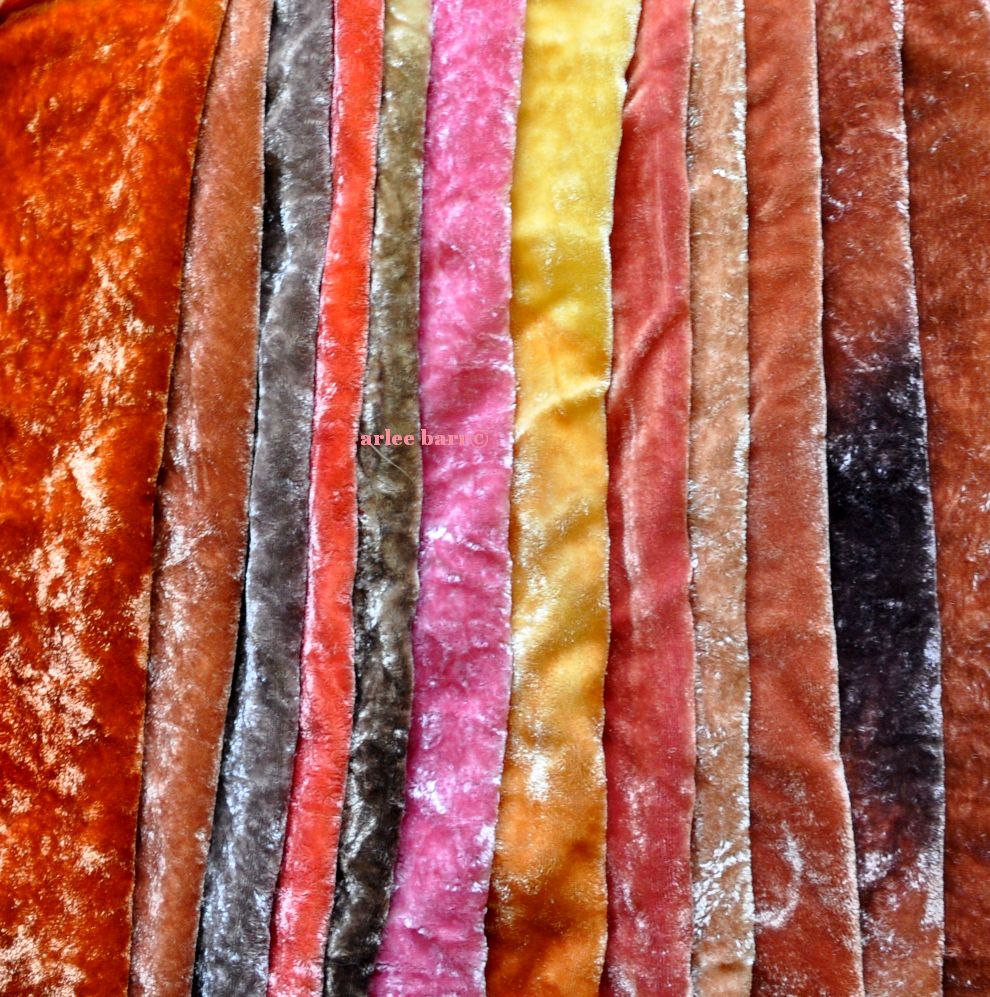
I just have to fire up the indigo pot, do some dye combinations and extend the colour range a bit more as we need greens, blues, purples, almost-blacks, different pinks!

Listings will start on July 5th, with 2 differently sized packs, and as always, i refund any extra shipping paid!